

The Village Has Changed
We have never been more connected, yet somehow parenting has never felt more lonely.
There is an old saying that most of us have heard countless times: “It takes a village to raise a child.” I have always loved the sentiment behind it because it paints a picture of parenting that feels warm and communal.
It reminds us that children were never supposed to be raised by one or two exhausted adults trying desperately to remember PE kits, school appointments, dinner, emotional wellbeing, homework, friendships, dentist appointments and whether anybody actually changed the empty toilet roll.
The village meant there were other eyes watching, other hands helping and other adults pouring into your children. It meant that when your own capacity was running low, somebody else’s might carry you for a little while.
Yet lately, I have found myself wondering: where did the village go?
Because we are living in an age where we can contact almost anybody within seconds. We have family WhatsApp groups, school-parent chats, social media communities, parenting forums, FaceTime and entire online spaces dedicated to motherhood and fatherhood.
We can know what someone had for breakfast without having spoken to them properly for six months.
We are more connected than any generation before us.
And yet, somehow, so many parents are incredibly lonely.
Perhaps the village hasn’t completely disappeared.
Perhaps the village has changed.
When the Village Was Simply…
When I think about the idea of a village, I don’t necessarily imagine some perfect time when everybody lived harmoniously, and children ran happily between houses.
Previous generations had their own difficulties, and sometimes what we nostalgically call community also came with intrusion, gossip and very little respect for personal boundaries.
Still, there was something about the accessibility of people that feels different from what many families experience today.
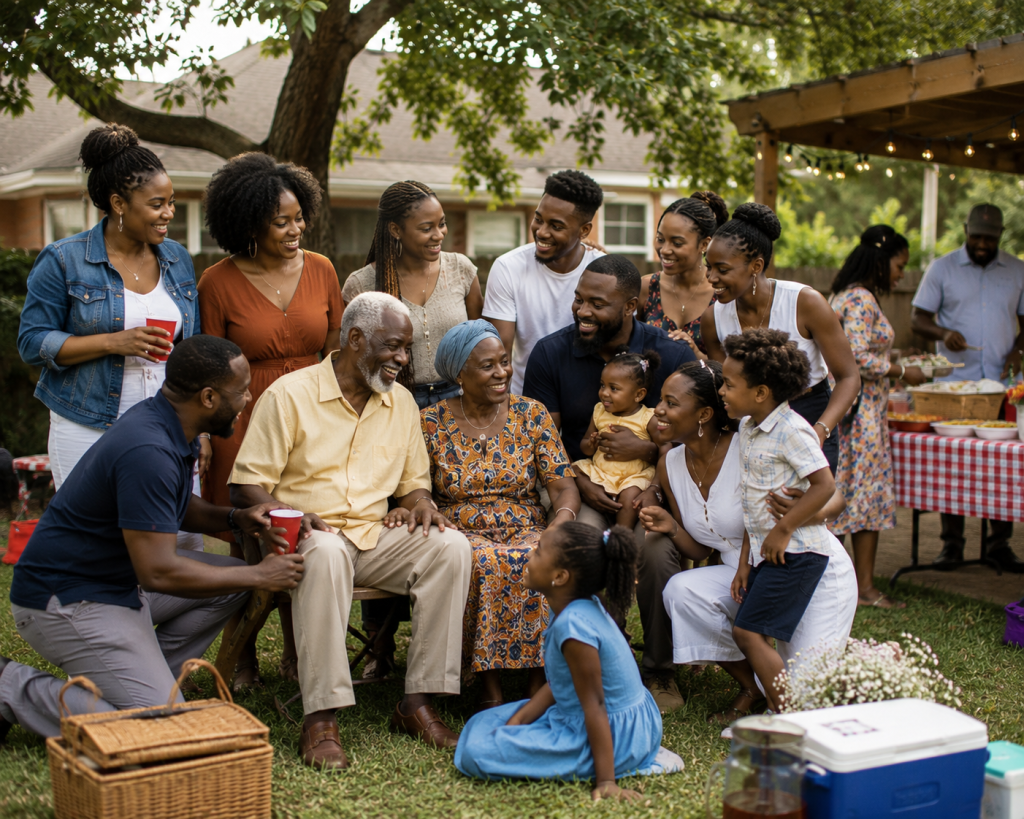
There were aunties who weren’t really aunties.
Neighbours who knew whose children belonged to whom.
Friends whose houses became extensions of your own.
Someone could notice that your child had been unusually quiet. Someone else might feed them because they happened to be there at dinner time. Children grew up surrounded by adults who knew them beyond their immediate household.
Parents also seemed more able to depend on other people without feeling that dependence represented failure.
Today, life looks different.
Families are spread across cities, countries and sometimes continents. Grandparents who might once have been available to help are often still working themselves. Parents work long hours. People commute.
Weekends become an endless rotation of children’s activities, household jobs, family commitments and trying to recover enough energy to start again on Monday.
Even when we love each other deeply, sometimes everybody is simply busy surviving their own lives.
And gradually, without necessarily noticing it happening, parenting has become more individualised.
My children. My responsibility. My problem to solve.
That can become an incredibly heavy way to raise a family.
Connected to Everyone, Known by Few
There is a strange contradiction in modern life.
We can share more about ourselves than ever before while simultaneously feeling that very few people actually know us.
A parent can post photographs of a beautiful family day out while having cried in the bathroom that morning.
We can congratulate one another underneath pictures of children’s achievements without knowing that behind the photograph there has been anxiety, arguments, school difficulties or a parent wondering whether they are getting any of this right.
We see the birthday celebrations.
We don’t see the financial pressure behind them.
We see the family holidays.
We don’t see the difficult conversations that happened in the hotel room.
We see the smiling first-day-of-school photograph.
We don’t see the parent sitting in the car afterwards worrying about whether their child will make friends, cope academically or find their place.
Digital connection can create the illusion that we are surrounded while leaving us emotionally alone.

Because being able to contact someone isn’t the same as being able to lean on them.
And perhaps that is what the village was always supposed to provide.
Not simply people around us, but people we could lean towards.
When Asking for Help Feels Like Admitting Failure
Somewhere along the way, many parents have absorbed the message that capable parenting means managing everything ourselves.
We celebrate independence. We praise the parent who manages work, children, home, activities and relationships while somehow appearing composed through all of it.
We call them strong.
We say, “I don’t know how you do it.”
And perhaps sometimes they don’t know either.
Because what we often don’t see is the cost of constantly being the person who manages.
There is a vulnerability in saying:
- “I’m struggling.”
- “Can you have the children for a couple of hours?”
- “I don’t know what to do about this.”
- “My child is going through something, and I am frightened.”
- “I need help.”
Those words should activate a village. But sometimes they activate judgement instead, and that is where things become complicated.
When the Village Becomes the Courtroom
The village sounds beautiful until you realise that villages talk.
Sometimes the very people who should help carry us become the people we are most afraid of being honest with.
A parent shares that their teenager is struggling and suddenly everybody has a theory about what went wrong.
- Perhaps they were too soft.
- Perhaps they were too strict.
- Perhaps they gave them a phone too early.
- Perhaps they work too much.
- Perhaps they didn’t discipline them enough.
- Perhaps they disciplined them too much.
Parenting has somehow become one of those areas where everybody feels qualified to conduct an assessment from the outside.
We see a child having a difficult moment and sometimes make conclusions about an entire household.
We see a parent struggling and decide what they should have done differently. We see a teenager making poor choices and quietly wonder what their parents allowed to happen.
And yet most of us know, if we are willing to be truthful, that children are not machines. You can pour love, values, boundaries, time and wisdom into them and they will still become people with personalities, emotions, struggles and choices of their own.
Perhaps the village becomes unsafe when support is replaced by scrutiny.
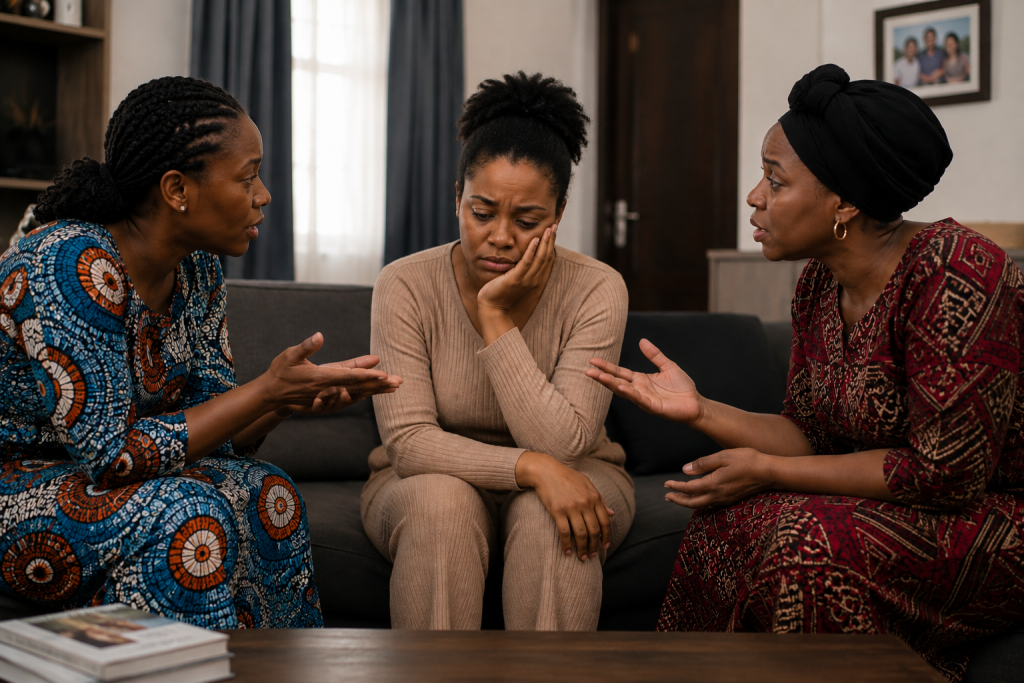
Because people rarely reveal the messiest parts of parenting in places where they believe their vulnerability will later become conversation.
The Fear of Being the Parent Who Isn’t Coping
I think there is another layer to this that we don’t talk about enough.
Sometimes we don’t ask for help because we don’t want anyone to think we can’t cope.
There is almost an unspoken badge of honour attached to being the parent who keeps everything moving.
- The children are okay.
- Work is okay.
- The house is okay.
Everything is fine. Except sometimes it isn’t.
Sometimes parenting is exhausting.
Sometimes your child is going through something you don’t know how to fix.
Sometimes you are tired of making decisions.
Sometimes you need somebody else to reassure you that one difficult season doesn’t mean you have failed.
And sometimes you don’t need advice at all.
You simply need somebody to say:
“That sounds hard. What do you need?”
Imagine how different parenting communities might feel if that became our first response rather than immediately offering judgement, comparison or solutions.
The Village Isn’t the Parent
There is an important distinction here because community does not mean everybody gets unlimited access to our children or unlimited authority over how we raise them.
Some changes in modern parenting are good.
We understand boundaries differently.
We understand safeguarding differently.
We think more carefully about emotional wellbeing, consent, discipline and the impact adults can have on children.
There are things previous generations normalised that many of us have intentionally decided not to repeat.
Building a village does not require surrendering our judgement as parents.

It means recognising that healthy independence and healthy interdependence can exist together.
I can be responsible for my children while still allowing trusted people to love them.
I can make the final decisions while still seeking wisdom.
I can protect my family’s boundaries while allowing community inside them.
I can be a capable parent and still need help.
Those things are not contradictions.
Maybe the Village Looks Different Now
Perhaps part of the problem is that we are looking for an old version of the village in a world that no longer functions in the same way.
Maybe today’s village isn’t necessarily the neighbour who has known your family for thirty years.
Perhaps it is the parent at school who says, “I’ll bring her home with mine; don’t rush from work.”
Maybe it is the friend who knows your teenager well enough to notice when something isn’t right, or a person at church who has quietly become another trusted adult in your child’s life.
Maybe it is the friend you can call after a terrible parenting moment and say, “I completely lost it today,” knowing they will help you reflect without making you feel ashamed.
Maybe it is the family member who doesn’t only ask how the children are doing but remembers to ask:
“And how are you doing?”
These things can seem small, but villages have always been built from small acts repeated consistently.
- Showing up.
- Checking in.
- Collecting a child.
- Making an extra plate.
- Remembering an exam.
- Listening without judgement.
- Noticing when someone has gone quiet.
- Sitting with somebody when there isn’t an easy answer.
The village may look different now, but perhaps its purpose hasn’t changed at all.
Our Children Need More Than Us
There is also something beautiful about accepting that we cannot be everything to our children.
As parents, we naturally want to be their safe place, their adviser, their comfort and their biggest supporter.
But there will be moments when our children need voices other than ours.
There may be something a trusted auntie can say that they hear differently.
A teacher may recognise something in them that we haven’t seen.
A family friend may become the person they feel able to talk to during a difficult season.
A coach, mentor, youth leader or grandparent may reinforce something we have been saying for years, and somehow when they say it, suddenly it is revolutionary.
Slightly annoying? Absolutely.
But also beautiful.
Because perhaps successful parenting isn’t raising children who only know how to come to us.
Perhaps it is surrounding them with enough safe, wise and loving people that if there ever comes a moment when they cannot come to us, they still have somewhere safe to go.
That is a village too.
But Parents Need a Village Just as Much
Maybe this is the part of the proverb we overlook.
We say it takes a village to raise a child, but perhaps it also takes a village to sustain the people raising them.
Parents need somewhere to take their uncertainty.
Somewhere to admit they don’t know, to laugh about the ridiculousness of parenting without being misunderstood, or to say, “I love this child with everything in me, but today they have tested every fruit of the Spirit I possess.”
Somewhere to cry, receive wisdom, reminded that a difficult day doesn’t make them a bad parent, and they don’t have to perform competence.
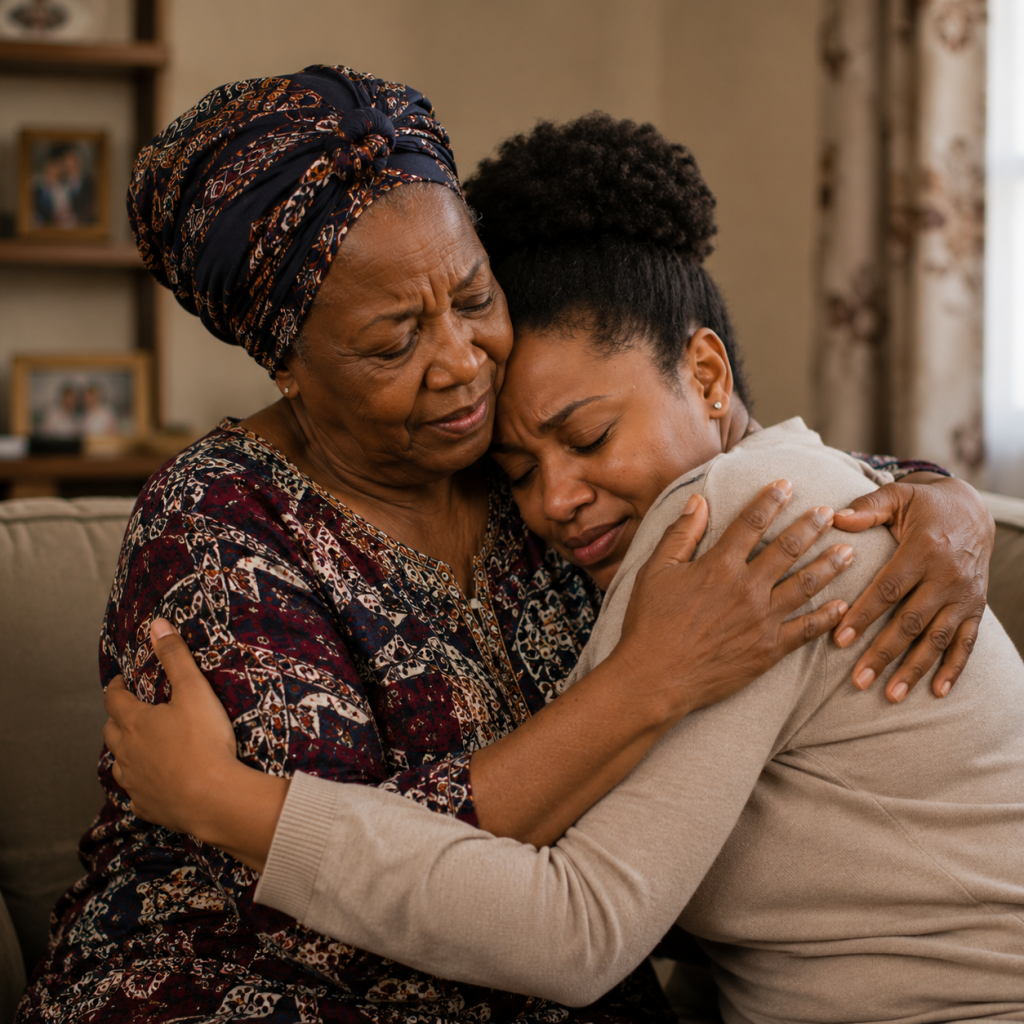
Because the strongest villages don’t just surround children.
They surround families.
Perhaps We Have to Become What We Are Missing
It is easy to look around and ask where the village went.
I have asked that question myself.
But perhaps there is another question that is slightly more uncomfortable:
What kind of village am I being?
When another parent’s child is struggling, do I judge or do I support?
When somebody admits that parenting is hard, do I listen or immediately tell them what I would have done?
When I see a parent overwhelmed, do I wait for them to ask for help or do I simply offer something practical?
When another family’s child succeeds, can I celebrate them without comparing them to mine?
When a parent trusts me with something vulnerable, am I safe enough to keep it there?
Because community isn’t something that simply happens around us.
We create it.
One relationship at a time.
One act of kindness at a time.
One decision not to gossip at a time.
One message saying, “I’m around if you need me.”
One moment of choosing compassion when judgement would have been easier.
The Village Has Changed, But We Still Need One
Perhaps we will never return to the village our parents or grandparents knew.
And perhaps we shouldn’t romanticise everything about it.
But I don’t believe we were designed to raise children completely alone.
We need people.
Our children need people.
And in a world where we can have hundreds of contacts in our phones yet struggle to think of one person we can call when everything falls apart, perhaps it is time to reconsider what connection really means.
Maybe the goal isn’t to recreate the old village.
Maybe it is to build a better one.
A village with boundaries.
A village without judgement.
A village where vulnerability doesn’t become gossip.
A village where children are surrounded by safe adults and parents are surrounded by people who remind them they don’t have to carry everything alone.
A village where asking for help isn’t evidence that you are failing, but evidence that you understand something generations before us seemed to know instinctively:
We were never meant to do all of this by ourselves.
So perhaps the question is no longer simply:
“Where did the village go?“
Perhaps the question each of us needs to ask is:
“Whose village am I willing to be?“