
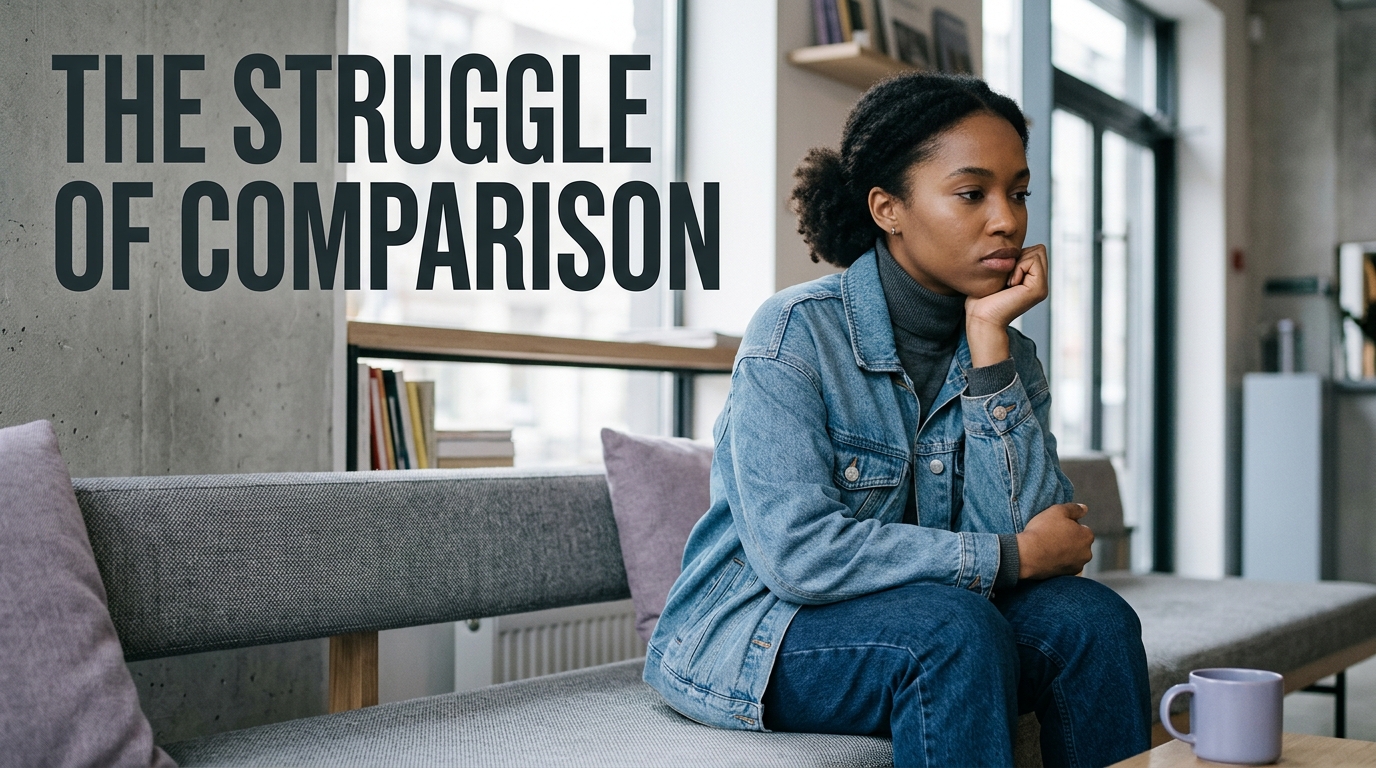
The Struggle of Comparison
Comparison is one of the quietest struggles of parenthood, yet it is also one of the most destructive. It rarely arrives loudly or announces itself in obvious ways. Instead, it slips into our thoughts unnoticed as we scroll through social media, sit in the audience at school assemblies, stand chatting in the playground or watch another family seemingly navigate life with ease.
Before long, what began as admiration quietly becomes self-doubt, and we find ourselves questioning whether we are doing enough, giving enough or simply being enough for the children we love.
The difficult thing about comparison is that it convinces us we are making fair comparisons when, in reality, we are not. We compare our ordinary, complicated, behind-the-scenes lives with someone else’s carefully selected highlights.
We see the smiling family photograph but not the argument that happened in the car before they arrived. We notice the child collecting awards but not the anxiety that keeps them awake at night. We admire the parent who appears calm and organised without seeing the emotional exhaustion they carry once the front door closes behind them.
Comparison is powerful because it asks us to measure ourselves against stories we were never fully invited into.
When We Begin Comparing Our Children
As parents, we do not only compare ourselves; we compare our children too, often without realising it. We notice who learned to read first, who speaks confidently in front of a crowd, who has the most friends, who brings home certificates, who behaves beautifully in public or who appears naturally gifted.
Little by little, these observations can begin to shape our expectations, until we find ourselves worrying that our own child is somehow falling behind.
The danger is that every child develops according to a timetable that was never designed to match anyone else’s. Some children flourish academically while others possess extraordinary emotional intelligence. Some are natural leaders while others quietly change lives through kindness and compassion.
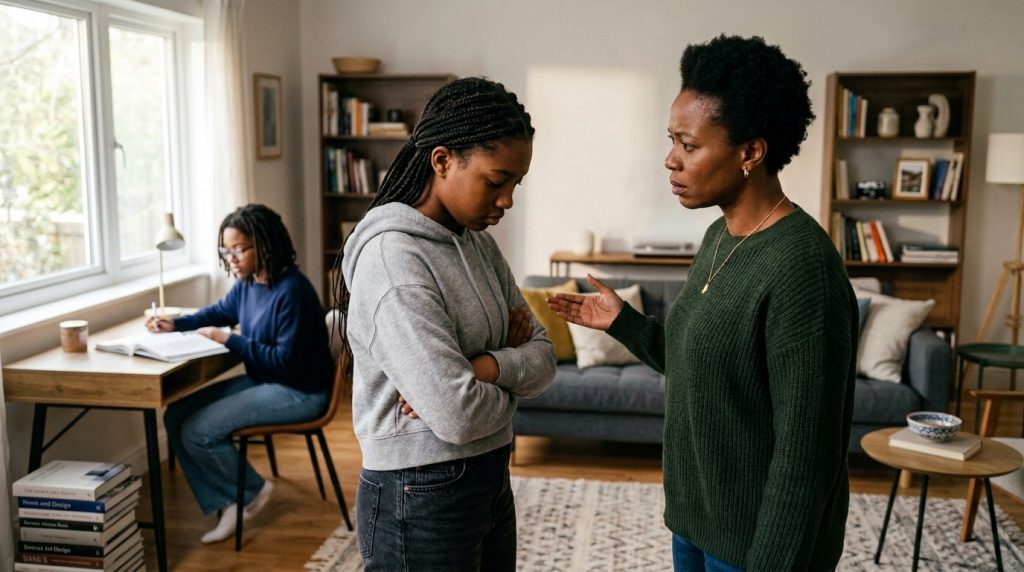
One child may need years to build confidence while another walks fearlessly into every new situation. None of these differences determines their worth, yet comparison has an uncanny ability to convince us that only certain qualities deserve celebrating.
When we become consumed by comparison, we risk overlooking the quiet victories taking place in our own homes. The anxious child who managed to walk into school despite every instinct telling them to stay home has achieved something remarkable.
The teenager who finally chose honesty after months of hiding mistakes has made enormous progress. The sibling who offered forgiveness instead of retaliation has demonstrated character that will serve them for a lifetime. These are victories that rarely receive applause, but they are often the moments that matter most.
Comparison Changes the Way We Parent
One of the saddest consequences of comparison is that it subtly changes the lens through which we see our children. Instead of appreciating who they are becoming, we begin focusing on who they are not. We become impatient.
Their progress does not resemble someone else’s, frustrated because their strengths look different or disappointed because they have not reached milestones according to the timeline we had imagined.
Children are remarkably perceptive. They may never hear us voice these comparisons aloud, but they often feel the weight of expectations that were never intended for them to carry. Every child deserves a home where they know they are loved for who they are rather than measured against who someone else has become.
The safest place in the world should be the place where they never feel they have to compete for acceptance.
The Freedom of Running Your Own Race
One of the greatest lessons parenting continues to teach me is that faithfulness looks different in every family. Some seasons require us to invest heavily in emotional wellbeing. Others demand patience, resilience, or simply surviving one difficult day at a time.
Success cannot always be measured by report cards, sporting achievements or perfectly behaved children because the deepest work of parenting often happens in places that nobody else can see.

Our children are not projects to be perfected but people to be loved. They do not need parents who appear flawless; they need parents who remain present.
They need mothers and fathers who apologise when they get things wrong, who celebrate small victories, who choose connection over performance and who continue showing up, even when parenting feels painfully difficult. Those are the moments that shape childhood far more profoundly than any achievement ever could.
When Parents Choose Honesty
I have often thought about how different parenting would feel if we were brave enough to be honest with one another.
Imagine a room filled with parents. At first, the conversations sound exactly as you would expect. Someone proudly shares that their child has just passed another exam with flying colours.
Another laughs about how their son has just been selected for the county football team. Someone else talks excitedly about university offers, family holidays and the latest achievement their child has brought home.
Around the room, smiles are exchanged, congratulations are offered, and everyone appears genuinely happy for one another. Yet, quietly, comparison begins to creep into hearts. One parent wonders why their child is still struggling at school.
Another questions whether they are doing enough because their teenager seems to have lost all motivation. Someone else smiles politely while carrying the weight of a child whose anxiety has made simply getting through the school gates feel like climbing a mountain.
Then something unexpected happens.
One parent gently breaks the cycle.
“I know it probably doesn’t look like it,” she says, “but my daughter cries most nights because she’s terrified of failing those exams.”
Another parent nods before admitting, “My son made the football team, but we barely speak at home anymore. I’d trade every medal he owns just to have one proper conversation with him.”
Across the room, another voice joins in. “Everyone tells me how polite my children are, but I’ve spent the last six months wondering whether I’m getting anything right because every day feels like a battle.”
Suddenly, the atmosphere changes.
The pressure to perform disappears because nobody is pretending anymore. Parents stop competing and start connecting. Advice is shared without judgement, tears are met with understanding rather than embarrassment, and the room becomes something far more valuable than a gathering of successful families. It becomes a safe place where people can finally tell the truth.
I often wonder how much comparison survives simply because honesty never gets the opportunity to speak. The moment we become vulnerable with one another, we begin to realise that every family carries joys and struggles in equal measure.
The details may differ, but the questions that keep us awake at night are remarkably similar. We all wonder if we’re doing enough. We all carry moments of doubt. We all hope our children will be okay.
Perhaps comparison flourishes most where authenticity is absent, because it is incredibly difficult to envy someone once you truly know the whole of their story.
The most beautiful gardens are not filled with identical flowers blooming at the same time. Their beauty lies in their diversity, their uniqueness and the fact that each one flourishes in its own season. Families are no different.
Your story was never meant to look like anyone else’s, and neither were your children. The goal has never been to win the race against other parents but to faithfully love the precious lives God entrusted to you, one ordinary, beautiful day at a time.
A Gentle Reminder
If comparison has quietly stolen some of your joy recently, perhaps it is time to loosen its grip. Celebrate another family’s blessings without believing they diminish your own. Rejoice in another child’s success without questioning the value of yours.
Trust that your child is becoming exactly who they need to become, even if their journey looks very different from the one unfolding beside them.