
Parenting While You Are Still Healing
Sometimes the child you are raising introduces you to the child you once were.
There are many things I expected parenting to teach me. I expected to learn patience, although I am still very much a work in progress on that one. I expected to learn sacrifice, responsibility and how to function on far less rest than any human being should reasonably require.
I expected school runs, difficult conversations, endless requests for money and the occasional moment when I would open my mouth and hear my own mother come out.
What I did not expect was how much parenting would teach me about me.
Not the polished, adult version of me who can explain what she believes, articulate her values and make reasonably sensible decisions. I mean the parts of me that were formed long before I understood what emotional patterns were.
The parts that learnt what love looked like, what anger sounded like, what happened when you made a mistake, whether adults apologised, whether emotions were welcomed, whether achievement earned praise and whether being “good” sometimes meant being quiet, compliant and easy to manage.
Parenting has a strange way of finding those places.
You can go for years believing something no longer affects you, and then your child does something completely ordinary, and your reaction feels disproportionately large.
They challenge you, and something inside you immediately interprets it as disrespect. They cry over something you consider small, and you feel irritated rather than compassionate. They make a mistake, and your instinct is to lecture rather than listen.
They tell you that something you said hurt them, and suddenly you are defending your intentions instead of hearing their experience.
Sometimes the moment passes, and you are left wondering:
Why did that affect me so much?
And sometimes, if we are brave enough to follow that question, the answer doesn’t begin with our children at all.
It begins with us.
The Wounds Parenting Reveals
I think many of us enter parenthood believing that love will be enough.
We love our children fiercely, so surely that love will protect them from the things that hurt us.
We tell ourselves:
I will never make my child feel the way I felt.
I will listen.
I will be affectionate.
I won’t shout like that.
I won’t put that kind of pressure on them.
My children will always know they can talk to me.
And we mean every word.
But then real parenting begins.
Not the parenting we imagined before children, when our hypothetical children responded perfectly to our hypothetical calm voices. Actual parenting. Parenting when you have repeated yourself seven times. Parenting when work has drained you.
Parenting when you are worried about money, relationships, ageing parents, deadlines and a hundred other things your children know nothing about. Parenting when you are tired and your child chooses precisely that moment to test a boundary you thought had already been established.
That is often when our carefully constructed intentions collide with our instincts.
And instincts have histories.
Sometimes what comes out of us in those moments was planted long before our children arrived.
“But I Turned Out Fine”
There is a phrase many of us have heard, and perhaps some of us have said:
“It didn’t do me any harm. I turned out fine.”
Maybe we did.
But “fine” is an interesting word.
Sometimes we call ourselves fine because we learnt to function.
We became responsible. Independent. Successful. Dependable. We learnt how to keep going, how to solve problems and how not to need too much from anybody.
From the outside, that can look remarkably like being fine.
But parenting can make us question whether surviving something and being unaffected by it are actually the same thing.
Perhaps you were praised for being the child who never caused trouble, and now you find your own child’s strong emotions difficult to tolerate.
Perhaps mistakes were heavily criticised in your home, and now your child’s mistakes trigger anxiety because somewhere inside you still believe mistakes are dangerous.
Perhaps adults were never questioned, so your teenager asking “why?” feels disrespectful even when they are simply trying to understand you.
Perhaps affection wasn’t expressed easily, and now you love your children deeply but sometimes struggle to communicate that love in the way they need to receive it.
Perhaps achievement was celebrated more loudly than effort, character or emotional wellbeing, and without realising it, you have started measuring your own parenting through your children’s accomplishments.
None of this means our parents didn’t love us.
And recognising what affected us doesn’t require us to put previous generations on trial.
Most people parent from what they know, what they experienced, what they survived and what was considered normal at the time.
But understanding that can coexist with another truth:
Something can have been normal and still have wounded you.
When Your Child’s Words Make You Pause
One of the most humbling parts of parenting is discovering that our children sometimes experience us differently from how we experience ourselves.
We know our intentions.
They experience our impact.
That difference can be difficult to sit with.
You might think you are teaching resilience while your child experiences pressure.
You might believe you are giving advice while they feel unheard.
You might think you are protecting them while they experience control.
You might believe your raised voice lasted only a few minutes while they remember exactly how it made them feel.
And sometimes they tell us.
There is a particular discomfort in hearing your child say:
“Mum, you don’t listen to me.”
Or:
“I didn’t tell you because I knew you’d be angry.”
Or:
“Why does everything have to become a lecture?”
The instinct to defend ourselves can arrive immediately.
Of course I listen.
You don’t understand everything I do for you.
I’m only hard on you because I want the best for you.
And perhaps all of those things are true.
But I am learning that sometimes the most important question isn’t whether my intention was good.
It is whether there is something in what my child is saying that I need to hear.
That is difficult.
Because parenting requires authority, but healing requires humility.
And sometimes we need both in the same conversation.
Our Children Can Trigger the Child We Used to Be
There are moments when I think we aren’t simply parenting our children.
We are also encountering younger versions of ourselves through them.
The child who confidently says no may awaken the child in us who was never allowed to.
The child who struggles academically may touch the part of us that learnt very early that achievement brought approval.
The teenager who wants independence may trigger our own fear of abandonment.
The child who cries freely may frustrate us because nobody made space for our tears.
The child who speaks boldly may feel disrespectful because we learnt that good children stayed quiet.
The child who makes mistakes without collapsing under shame may almost offend the part of us that had to become perfect to feel safe.
That is why some parenting moments can feel so much bigger than the thing actually happening.
We think we are reacting to the messy bedroom.
Sometimes we are reacting to what the mess represented in our childhood.
We think we are reacting to a bad grade.
Sometimes we are reacting to our own fear of failure.
We think we are reacting to “attitude.”
Sometimes we are reacting to a child exercising a voice we were never permitted to have.
And none of that means boundaries disappear.
Healing does not require us to allow disrespect, remove expectations or become afraid to parent our children.
It simply asks us to become curious about why certain things provoke such powerful reactions in us.
When Breaking Cycles Gets Real
“Breaking generational cycles” has become a phrase we use quite easily.
It sounds inspiring.
But the actual work of breaking cycles is rarely glamorous.
It can look like feeling anger rise inside you and choosing not to use the words that were once used against you.
It can mean apologising to a child even though adults never apologised to you.
It can mean allowing your child to express disappointment without interpreting their disappointment as disobedience.
It can mean learning how to regulate emotions at the same time you are trying to teach emotional regulation.
It can mean stopping halfway through an argument and realising, I don’t like who I am becoming in this conversation.
Sometimes it means returning later and saying:
“I was right about the boundary, but I was wrong in the way I spoke to you.”
That distinction matters.
Apologising does not remove parental authority.
If anything, it teaches children something powerful about authority: having power does not make you exempt from accountability.
Our children need to know that adults can get things wrong and repair them.
Perhaps especially because many of us grew up believing adults were simply right because they were adults.

Healing Does Not Mean Blaming Our Parents
This is important.
There is a temptation when we begin understanding our childhood to look backwards with anger and suddenly reinterpret everything through the language we have now.
But healing does not have to become accusation.
Our parents had childhoods too.
They inherited patterns.
They had fears they probably never named, wounds they never discussed and experiences they may never have had the language to process.
Some were parenting while surviving.
Some gave us things they themselves had never received.
Some got things beautifully right and other things painfully wrong.
That complexity matters.
I can honour what was good and still acknowledge what hurt.
I can understand why somebody behaved the way they did without pretending it had no impact on me.
And I can decide that something stops with me without needing to hate the person it came through.
That, perhaps, is one of the most difficult parts of healing.
Holding compassion and truth in the same hand.
The Fear of Getting It Wrong Again
There is another danger when we become conscious of our own wounds: we can become terrified of damaging our children.
We analyse everything.
Was I too harsh?
Was I too soft?
Should I have handled that differently?
Will they remember that argument forever?
Have I created some terrible childhood memory that will appear in therapy twenty years from now?
The pressure can become another form of unhealthy parenting.
Because our children do not need perfectly healed parents.
They need parents who are aware enough to reflect, humble enough to repair and courageous enough to keep growing.
There will be things my children experience differently from how I intended them.
There will be moments I wish I could redo.
There will be days when tiredness gets the better of me, when I respond too quickly or realise afterwards that I could have listened longer.
Healing doesn’t mean those moments disappear.
It means I become less afraid to look at them.
It means I don’t have to protect my image of myself as a “good parent” at the expense of hearing what my child actually experienced.
Perhaps good parenting isn’t getting it wrong.
Perhaps sometimes it is showing our children what we do after we realise we got it wrong.
We Are Parenting in Two Directions
The more I think about it, the more I realise that parenting can sometimes feel as though we are moving in two directions at once.
We are looking forward, trying to prepare our children for the people they will become.
But we are also looking backwards, consciously or unconsciously, at the people we once were.
We are deciding what to carry forward.
What to leave behind.
What to reinterpret.
What to forgive.
What to learn again.
And what must end with us.
That is enormous work.
Sometimes we are teaching our children emotional language while learning it ourselves.
We are telling them they don’t have to be perfect while trying to unlearn our own perfectionism.
We are encouraging them to rest while feeling guilty when we do.
We are teaching them boundaries while discovering ours.
We are telling them their worth is not determined by achievement while quietly asking whether ours is.
We are teaching them that their voice matters while learning how to use our own.
Maybe that is why parenting can feel so emotionally demanding.
We aren’t simply raising children.
Sometimes we are re-raising parts of ourselves.
Your Children Are Not Responsible for Your Healing
But there is an important boundary here.
Our children may reveal our wounds, but they should never become responsible for healing them.
It is not their job to manage our emotions.
It is not their responsibility to avoid certain subjects because they know how we will react.
They should not have to become smaller so that we can feel safer.
And they should never have to carry the weight of experiences that happened before they were born.
That work belongs to us.
Sometimes that means reflection.
Sometimes prayer.
Sometimes difficult conversations.
Sometimes professional support.
Sometimes simply learning to pause before responding and asking ourselves:
Is this about what my child has done, or about what this has awakened in me?
That question alone can change a conversation.
Healing While Parenting
For a long time, I think we have imagined healing as something that should happen privately and completely before we can become healthy for other people.
But life rarely works that neatly.
Many of us are raising children while still understanding ourselves.
We are loving while healing.
Leading while learning.
Teaching lessons we are still practising.
Trying to give our children emotional safety while discovering what safety means for us.
And perhaps there is something beautiful in allowing our children to witness some of that growth—not making them responsible for it, but allowing them to see that adulthood does not mean arrival.
They can hear us say:
“I’ve thought about what you said.”
“I understand that differently now.”
“I shouldn’t have responded like that.”
“I’m working on this too.”
What a gift it might be for a child to grow up knowing that growth doesn’t stop when you become an adult.
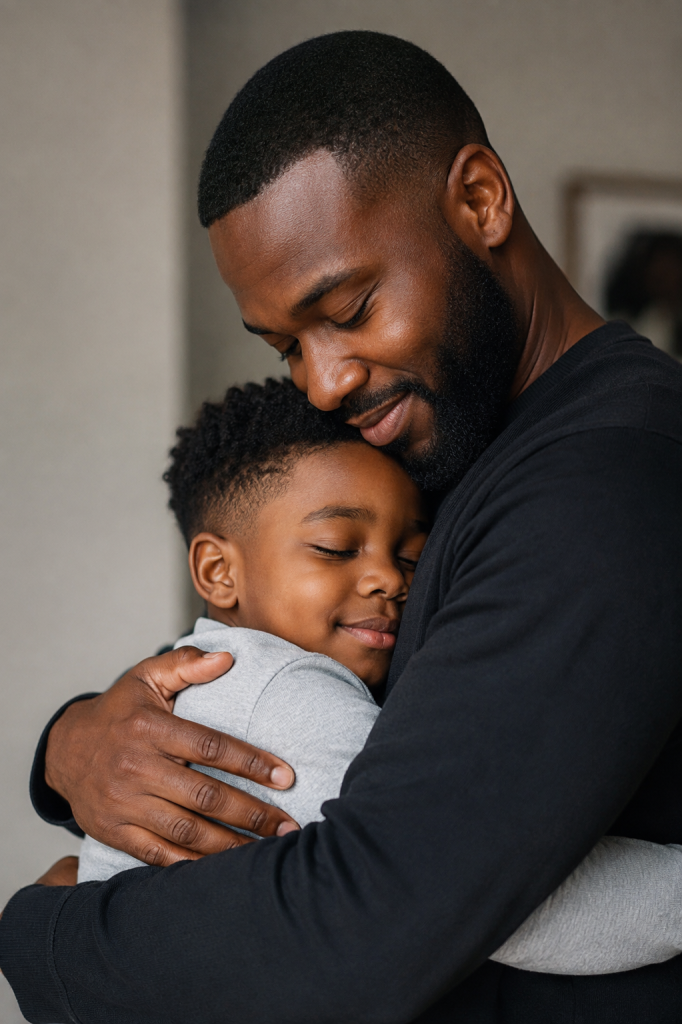
That changing your mind isn’t weakness.
That apologising doesn’t diminish you.
That recognising a pattern means you have an opportunity to change it.
That healing can happen at forty, fifty, sixty or eighty.
Maybe This Is Part of the Gift
There is something incredibly vulnerable about parenting while still healing.
Our children can reach places inside us that we thought were long buried. They can challenge beliefs we never realised we held. They can expose our fears, test our patience and force us to confront versions of ourselves we might otherwise have avoided.
But perhaps that is not only the difficult part of parenting.
Perhaps it is also one of its unexpected gifts.
Because in trying to give our children something healthier, we sometimes discover that we deserve healthier things too.
When we tell them they are allowed to make mistakes, perhaps something inside us begins to believe we are allowed to make them too.
When we teach them that their emotions are valid, perhaps we finally make room for our own.
When we tell them they don’t have to earn love through achievement, perhaps we begin questioning why we have spent so much of our lives trying to do exactly that.
When we create a home where they can speak, perhaps the child we once were finally feels heard too.
And maybe that is one of the quiet miracles of parenting.
We begin thinking our job is simply to raise them.
Then somewhere along the journey, we realise that while we have been helping them become who they are, they have been revealing who we are becoming too.
So if parenting has exposed parts of you that are still tender, perhaps the question isn’t, “How can I possibly raise a healthy child when I am still healing?”
Maybe the better question is:
“What is this moment teaching me about what still needs my attention?”
Because healing and parenting do not always happen one after the other.
Sometimes they happen together.
Sometimes we hold our children’s hands while quietly learning how to hold the hand of the child we used to be.
And perhaps breaking cycles isn’t about giving our children a childhood untouched by our humanity.
Perhaps it is about giving them something many generations before us did not always receive:
A parent willing to look inward, take responsibility, repair what can be repaired, and choose again and again not to pass every wound forward.