

Can I Enjoy This Without Feeling Guilty?
There is a particular kind of guilt that knows exactly when to turn up. You have finally sat down. You are enjoying a meal, laughing with a friend, or looking forward to a few days away. For a moment, you feel lighter. Then the thought arrives.
There is washing waiting. Someone needs a reply. That money could have gone towards something more practical. The children might need something. Someone you love is going through a difficult time.
Before long, a pleasant moment has become another thing you need to justify. I wonder how many of us have become so used to being responsible that we no longer know how to enjoy ourselves without first explaining why we deserve to.
- “I have been working really hard.”
- “I haven’t done this in years.”
- “I made sure everything was sorted before I left.”
All of those things may be true. But I hear how quickly we reach for them, almost before anyone has questioned us. Sometimes, we are answering an accusation nobody has made aloud.
We have already made it ourselves.
When You Go Away but Your Mind Stays at Home
Going on holiday without your children can bring all of this to the surface. You look forward to the break. A few mornings without the school run. The chance to eat slowly, finish a conversation, or wake up without immediately figuring out what everybody needs. You imagine having some space to hear your own thoughts.
Then, as the holiday gets closer, the questions begin. Will they be all right? Have I explained everything? What if they need me? Is it selfish to go away when we could have spent that time together?
You organise the arrangements, leave the details and make sure they will be cared for. Yet somehow, practical preparation does not always settle the emotional part.
You can know that your children are safe and still feel uncomfortable about enjoying yourself somewhere they are not.
And once you arrive, there is another challenge: allowing yourself to actually be away.

Your body might be beside a pool, but your mind is checking what is happening at home. You reach for your phone between conversations. You wonder whether to call again, even though you have already spoken and everyone is fine. A delayed reply can send your thoughts in all sorts of directions.
Of course, you miss them. There will be things you see that you wish they could see too. You might taste something they would love or hear a comment that makes you think of them. That is part of loving people.
But missing our children does not mean we made the wrong decision by taking a break. We can love them deeply and enjoy a few days without being needed in quite the same way.
There is room for both feelings, even if it takes us a little while to get comfortable with them.
The Habit of Always Being Available
For those of us who spend much of our lives caring for others, switching off can feel unfamiliar.
We know how to anticipate needs. We notice changes in someone’s mood, remember appointments and keep track of the things that might otherwise be forgotten. Even when we are sitting still, there can be a great deal happening in our minds.
Being needed becomes part of the rhythm of the day. Sometimes, it becomes part of how we understand our value. So when there is suddenly nothing urgent to do, we reach for something. We check an email. Ask whether everything is all right. Offer to sort out a problem from miles away.
It can feel easier to remain useful than to settle into rest. I am learning that having time off and switching off are two different things. An empty diary does not automatically quieten a busy mind. Sometimes, it takes a few days to realise that we do not have to keep finding something to attend to.
That might mean agreeing on a time to check in with the children, then permitting ourselves to put the phone away between calls. It might mean leaving work emails unopened and trusting the arrangements we made before leaving.
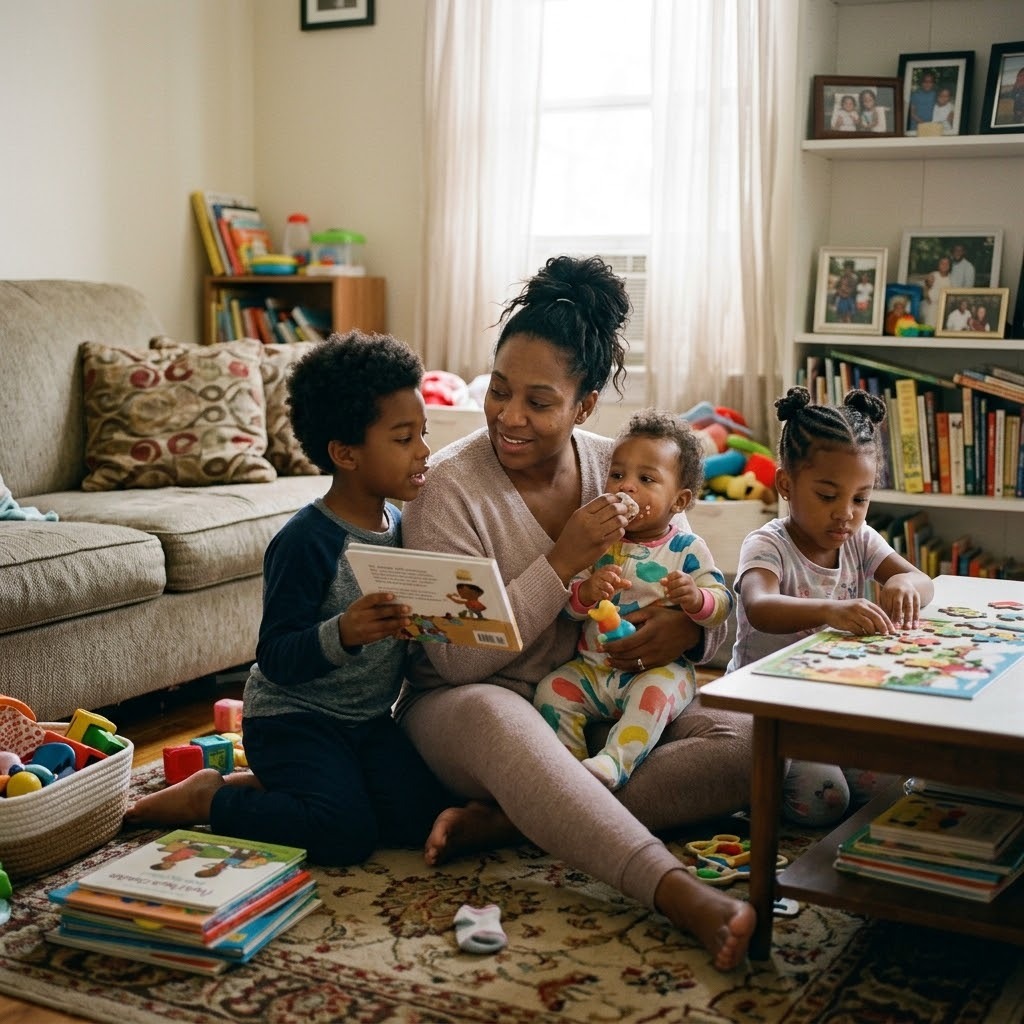
There may still be a little discomfort. We do not have to wait for that feeling to disappear before we allow ourselves to enjoy the day.
Joy While You Are Still Healing
Enjoyment can feel particularly complicated when you are healing. When life has been painful, there can be an unspoken expectation that you should look and feel sad all the time. Sometimes that expectation comes from other people. Sometimes it comes from within.
You find yourself laughing and then become aware of it. How can I be having such a lovely time when this part of my life is still so difficult?
Perhaps you are going through a separation, grieving a loss or coming to terms with a future that looks different from the one you imagined. There may be things you are still trying to understand, and feelings that catch you off guard on an ordinary afternoon.
Then a good day comes.
You get dressed and like what you see. You sit with people who make you laugh without having to explain everything. You become interested in somewhere new. For a while, you are absorbed in the experience in front of you.
Later, the sadness may return. That does not make the enjoyment false, or mean you have gone backwards.
Healing can include days like this: a little sadness in the morning, a lovely afternoon, a difficult thought before bed. We do not always move neatly from hurting to feeling better.
Sometimes, a holiday or a day away gives us enough space to notice how tired we have been. Sometimes, once the usual demands become quieter, feelings we have been putting aside begin to surface. We might need a cry as much as we need a laugh.
There should be room for that too.
A break does not have to fix our lives to be worthwhile. It can simply give us a few days of being cared for, sleeping a little longer, enjoying good company and remembering what interests us beyond our responsibilities.
That can matter more than we realise.

Remembering What You Enjoy
When you have spent a long time thinking about what everyone else likes, even a simple question can take a moment to answer.
What would you like to do today?
You might be so used to choosing the restaurant that suits the children, the time that works for everyone else or the activity that causes the least disagreement that you have forgotten to consider your own preference.
Having space to choose can feel surprisingly emotional.
Perhaps you want to walk without a destination. Read a book for an entire afternoon. Get dressed up for dinner. Stay in bed a little longer. Sit somewhere beautiful without turning the moment into anything productive. Perhaps you want to be quiet.
Perhaps you want to laugh loudly with your friends and remember that you have always had that side to you, even if it has been harder to reach lately.

There is something tender about becoming reacquainted with yourself after a difficult season. You notice the music you want to hear, the clothes you feel good in and the conversations that leave you feeling lighter.
These may seem like small things. But when so much of life has been about managing, deciding and getting through, having a preference of your own can feel like finding your voice again.
Making Room for Gratitude
My faith gives me somewhere to bring both the gratitude and the worry. I can thank God for a beautiful day while still asking for help with something painful. I can enjoy a meal, a friendship or a few days away without pretending that every other part of my life is settled.
There is comfort in that honesty. Sometimes, my prayer is simply, “Thank You for this. Help me to be here and enjoy it.” I do not always find it easy to leave tomorrow alone. There are things I cannot resolve by thinking about them for another hour, yet I can still give them the whole afternoon if I am not careful.
Gratitude helps me pay attention to what is actually in front of me: the warmth, the conversation, the food, the chance to breathe a little more easily. Other prayers remain unanswered. There is still goodness here.
Letting the Good Moment Be Good
Of course, responsibilities matter. Budgets are real. Children need care, and there are times when plans have to change because someone genuinely needs us.
But it is worth asking ourselves what the guilt is pointing to. Is there something that needs my attention now? Or am I finding it difficult to be unavailable because I am so used to being on duty?
If the children are safe, the arrangements are in place, and there is nothing urgent to resolve, perhaps we can let that be enough for the moment.
We do not have to fill the space with extra checking. We do not have to spend the holiday proving how much we miss home. We can look forward to seeing our children and still be glad we came. And when we return, there will be washing. There will be messages and appointments and all the familiar demands of everyday life.
But we will also have something of our own to carry home. A funny story. A photograph we love. The memory of a conversation that went on for hours. A morning when we woke up and felt rested. So, the next time something lovely happens, I hope we can stay with it a little longer.
Taste the food while it is warm. Finish the conversation. Swim. Let yourself laugh without checking whether you ought to be feeling something else.
You can miss your children and enjoy your holiday. You can be healing and have a happy day. You can care deeply about your life at home and welcome some time away from it. And when the children ask, “Did you have a good time?” I hope we can smile and say, “Yes, I really did,” without feeling the need to explain ourselves.