

To the Mother Who Keeps Showing Up
There is a version of motherhood that everybody gets to see. They see the school photographs, birthday celebrations, family holidays, proud moments and smiling children.
They see you at the school gate looking reasonably put together, at work getting on with your day, at church, at the supermarket, or sitting in the audience at the school concert you somehow managed to make despite everything else happening that week.
They see the finished product, but what they do not always see is everything it took to get you there.
They do not see the alarm going off at 6 am when your body is begging for another hour. They do not see you standing outside a bedroom saying, “You need to get up now,” for what feels like the fifteenth time.
They do not see the missing shoe, the school jumper that apparently disappeared overnight, the lunch being made while you are mentally running through your own working day, or the child who suddenly remembers at 7:42 am that they need something for school that they have known about for approximately two weeks.
They do not see you checking the time every three minutes because somehow you are responsible for everybody leaving the house on time, including people who appear to have absolutely no concern about leaving the house on time.
And somehow, you sort it. You get everybody where they need to be and then turn your attention to whatever the rest of your day requires from you.

For many mothers, that means going to work and spending the next eight, ten or sometimes twelve hours being competent, professional and available to everybody else.
You make decisions, answer questions, meet deadlines, solve problems and carry responsibilities that require you to be fully present.
Nobody necessarily knows what happened before you arrived. Nobody knows that you were awake during the night worrying about one of your children. Nobody knows that the morning ended in an argument because somebody could not find something. Nobody knows that you sat in the car for a few extra minutes before walking into work because you simply needed silence.
You walk in. You smile. You get on with it. And then eventually the working day ends. Except, of course, your day hasn’t ended at all.
Motherhood is waiting.
The Reality of Being a Working Mother
There is something particularly exhausting about being a working mother that is difficult to explain unless you have lived it.
You can spend an entire day giving your energy, concentration and emotional capacity to work and then walk through your front door straight into another shift.
There is dinner to think about, homework to check, conversations to have, school emails to read, uniforms to find, forms to sign and children who have been waiting all day to tell you something important.
And the thing about children is that their important thing rarely arrives at a convenient time.
It comes while you are cooking.
While you are answering an email.
While you are trying to remember whether tomorrow is PE day.
Or just as you have finally sat down.
Sometimes you are standing in the kitchen, trying to figure out what everyone is going to eat, while one child tells you about something that happened at school, another needs something signed, and your phone is buzzing somewhere.
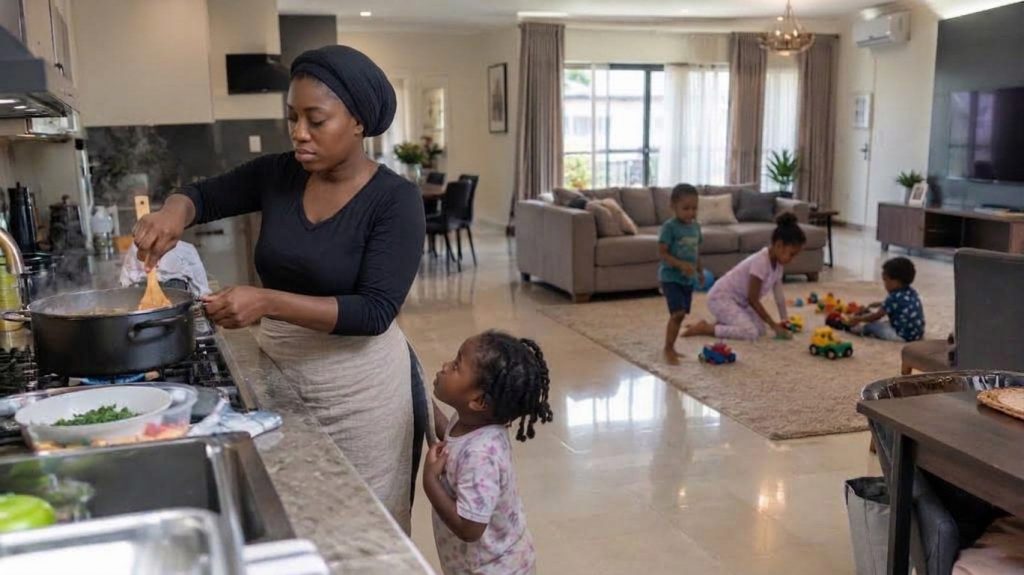
There are dishes in the sink, laundry waiting, and suddenly you remember the email you promised yourself you would send hours ago. Meanwhile, part of your brain is still processing something that happened at work.
It is a lot. Yet somehow, mothers become incredibly skilled at making a lot look ordinary.
That is perhaps one of the reasons the work of motherhood can become so invisible. When something is done consistently, people can begin to assume it happens effortlessly.
But consistency is not the same as ease.
The Invisible Mental Load of Motherhood
The physical tasks are only one part of motherhood. There is another kind of work that is much harder to see: the mental and emotional load. You can write school run, cook dinner, check homework and wash uniform on a to-do list.
But where do you write down noticing that one of your children has been quieter than usual?
Where do you record remembering which friendship they are struggling with, which subject they are worried about, which teacher needs an email, which appointment needs booking or which conversation you promised you would come back to?
Where do you put remembering that one child does not like a particular food anymore, that another needs something for school next Tuesday, or that somebody casually mentioned three days ago that they were worried about something?
There is a whole part of motherhood that exists entirely inside our heads.
And then there are the questions.
- Was I too harsh?
- Should I have listened more?
- Did I react instead of respond?
- Am I giving them enough independence?
- Am I giving them too much?
- Am I protecting them or am I projecting my own fears onto them?
- Am I preparing them for the world without making them afraid of it?
Sometimes motherhood feels like having 47 tabs permanently open in your brain. Three have frozen, two are flashing urgently, another needs updating, and one is playing music somewhere, but you cannot work out which one it is.
Then tomorrow morning you will probably open another five.
The Emotional Labour Nobody Puts on the Calendar
There is also the emotional part of motherhood that is rarely spoken about enough. Sometimes your child needs comfort when you need comfort too. Sometimes they are having a difficult day on a day when you are barely holding yourself together.
Sometimes you have received bad news, had a difficult day at work, argued with someone, worried about money or simply reached the end of your emotional capacity, and then your child walks into the room needing you.
And because you are “Mum“, you try to make space.
Not because mothers should suppress their own emotions. I actually think our children need to see that we are human too. But there are moments when parenting requires us to hold our own feelings gently to one side because somebody smaller, younger or less emotionally equipped needs us first.
That takes something from you.
Love is beautiful, but love can also be demanding. Both things can be true.
You can adore your children and still feel exhausted by parenting. You can be grateful to be a mother and still desperately need a break. You can miss your children when they are away and still enjoy the silence when they are gone. You can love your family deeply and occasionally want nobody to say “Mum” for approximately 45 minutes.
None of those things cancels each other out.
When Motherhood Exhaustion Becomes Normal
I think many mothers become so accustomed to functioning while tired that we stop recognising just how tired we actually are.
Someone asks how we are, and we automatically answer, “I’m fine, just tired.”
Just tired.
As though tiredness is insignificant. As though consistently pouring from a cup that barely had time to refill is simply part of the job description.

There have been evenings when I have looked around and realised there is still dinner to sort, something needs washing for tomorrow, somebody needs help with something, there is an email I forgot to send, and I haven’t actually sat down properly since walking through the door.
And motherhood does not always give you the luxury of saying, “I have nothing left today.”
Because somebody still needs you.
So you find something from somewhere.
Sometimes it is patience. Sometimes it is humour. Sometimes it is prayer. Sometimes it is simply doing the next thing because that is all you have capacity for.
That does not mean mothers are endlessly strong. Sometimes love simply carries us through moments when energy cannot. But being able to carry something does not mean it isn’t heavy.
Motherhood Guilt and the Pressure to Get It Right
As though the responsibilities themselves are not enough, motherhood often brings another companion: guilt.
Motherhood guilt can attach itself to almost anything. We feel guilty for working too much and then guilty for wanting more from our careers. We feel guilty when we lose our patience and guilty when we enforce boundaries that make our children unhappy.
We feel guilty when dinner is something quick, when we forget a school deadline, when we cannot attend something, when the house is messy or when we simply want an evening where nobody needs anything from us.
We can even feel guilty for resting because there is always something else that could be done.
- There is always another load of washing.
- Another email.
- Another room.
- Another task.
- Another thing we could be doing to make life better for everybody else.
Somewhere along the way, many of us created an imaginary mother against whom we constantly measure ourselves.
She is endlessly patient. She cooks nutritious meals every evening. Her laundry never becomes a mountain. She remembers every school event, attends everything, never raises her voice and apparently has children who happily tell her everything happening in their lives.
I have never met this woman. If I ever do, I have several questions, because real motherhood is far less polished.
Real motherhood includes apologising to your children because you got something wrong. It includes quick dinners, forgotten forms, rushed mornings, tears, laughter, frustration, cuddles, slammed doors and conversations that begin badly but somehow end with everyone understanding each other a little better.
There will be days when we get it beautifully right. There will also be days when bedtime arrives, and we think, Well, that could have gone better. Both belong in motherhood. The messiness does not mean we are failing, it means we are human beings raising human beings.
Our Children Do Not Need Perfect Mothers
Perhaps one of the greatest pressures we can release ourselves from is the belief that good motherhood means getting everything right.
Our children do not need perfect mothers.
- They need mothers who are willing to repair.
- They need to hear us say, “I shouldn’t have spoken to you like that. I’m sorry.”
- They need boundaries that sometimes frustrate them.
- They need us to listen even when we do not immediately understand.
- They need to see that adults make mistakes and can take responsibility for them.
- They need to know that love can survive disagreement.
I increasingly believe that some of the most powerful moments in parenting happen after things have gone wrong.
- When we return.
- When we talk.
- When we apologise.
- When we listen.
- When we try again.
Perhaps successful motherhood is not creating a childhood where nothing difficult ever happens. Perhaps part of it is creating a relationship where our children know difficult things can happen and we can still find our way back to one another.

The Things Our Children May Only Understand Later
One of the strangest things about parenting is that our children may not understand the weight of what we do while we are doing it.
And perhaps they are not supposed to.
They see the packed lunch. They do not see you mentally calculating the food shop. They see you reminding them to get off their phone and go to sleep. They do not see you awake later wondering whether they are genuinely okay.
They see the lift to school, the club, the friend’s house or wherever else they need to be. They do not necessarily know that you rearranged three things to make it happen.
They see you sitting in the audience at their event. They may never know what you moved around to be there. They see the boundary.
They do not always understand the love, fear and responsibility behind it, they simply know that Mum is there.
And maybe that is the gift. Children should not have to understand everything their parents are carrying. They should be allowed to experience the security of being cared for without carrying the full cost of that care.

But one day, perhaps much later, they may look back and understand differently. Maybe when they have responsibilities of their own, when life becomes complicated, when they find themselves doing something for somebody they love and suddenly remember you doing exactly the same thing for them.
They may realise that the ordinary things were never really ordinary.
The Ordinary Moments That Become Childhood
When we think about creating memories for our children, we often think about the big things.
- The holidays.
- Birthdays.
- Christmas.
- Days out.
- Celebrations.
They are wonderful, but I wonder whether childhood is actually built far more through repetition than spectacle.
- The same voice calling them downstairs every morning.
- The familiar sound of you coming through the door.
- The food you make without thinking about it.
- The ridiculous conversations in the car.
- The goodnight routine they eventually become too old for.
- The lift you complained about giving but gave anyway.
- The way you knew from one look that something was wrong.
- The way you sat beside them when they did not have the words to explain what they were feeling.
- The way home felt when you were there.
Those moments can feel insignificant while we are living them because they are so ordinary. But perhaps ordinary love, repeated consistently, becomes extraordinary when somebody looks back on it. Those ordinary moments become the architecture of childhood.
To the Mother Who Wonders If She Is Doing Enough
So this is for the mother whose alarm will go off again tomorrow morning. The mother balancing work, home, bills, school, appointments and everybody else’s emotions while occasionally forgetting that she is a person with needs too.
The mother who lost her patience today and has replayed the conversation ten times since. The mother whose laundry basket is currently winning. The mother who forgot something.
The mother who worries that she is not doing enough. The mother sitting in the car for five extra minutes because she needs silence before going inside. The mother who has spent money she did not really have because her child needed something.
The mother who worries about things she cannot control. The mother who wonders whether her children will ever truly understand just how deeply they are loved.
I hope you learn to give yourself some of the grace you give so freely to everybody else.
You do not have to romanticise exhaustion. You do not need to wear burnout as evidence that you are a good mother.
Rest is not selfish. Asking for help is not weakness. Having dreams, friendships, interests, ambitions and a life beyond motherhood does not make you less devoted to your children. You matter too.
And on the days when your mind automatically produces a list of everything you did not manage to do, perhaps deliberately make another list.
What did you do?
- You got up.
- You carried what needed carrying.
- You listened.
- You provided.
- You corrected.
- You encouraged.
- You apologised when you needed to.
- You worried because you cared.
- You loved.
- You tried.
- You kept going when the day demanded more from you than you thought you had available.
Most importantly, “YOU” showed up.

Maybe “Mum Was There” Is Enough
Perhaps imperfectly. Perhaps exhausted. Perhaps with unanswered emails, yesterday’s laundry still sitting exactly where you left it, and absolutely no idea what anyone is eating tomorrow.
But you showed up.
And maybe years from now, when our children tell the stories of their childhood, they will not remember whether the house was always tidy. They probably will not remember whether every meal was cooked from scratch or whether you occasionally sent them to school with something you bought from the shop five minutes before the gates closed.
They may not remember the forgotten form, the rushed morning or the day you were convinced you were getting everything wrong.
But perhaps they will remember something much simpler: “Mum was there.“
- There when life was good.
- There when it was difficult.
- There when they succeeded.
- There when they failed.
- There when they needed correcting.
- There when they needed comforting.
- There when they needed somebody to celebrate them.
- There when they needed somewhere safe to land.
And perhaps, years from now, they will finally understand that all those ordinary moments were love in its most practical form.
Not perfect love. Not Instagram-worthy love. Not love that always had endless patience, a spotless kitchen and a beautifully prepared dinner.
Just real love.
The kind that wakes up tired. The kind that worries. The kind that sometimes gets it wrong and comes back to repair it. The kind that keeps choosing to be present.
So, to the mother quietly doing a hundred things nobody applauds and carrying a hundred thoughts nobody hears, I hope you know that your presence matters more than your perfection ever will.
One day, your children may forget many of the things you are currently putting yourself under enormous pressure to get right.
But I hope when they think about home, safety, comfort and the person who stood beside them through all the different versions of who they were becoming, one thought rises above everything else:
Mum was there.
And somewhere in all the years you spend showing up for them, please remember one more person deserves that same love, patience and grace.
You do. ❤️