
Teaching Our Children to Say Sorry Without Carrying the Blame
There is something about sibling arguments that can test even the most patient parent. One minute, your children are laughing together, sharing stories and behaving as though they couldn’t possibly live without each other. The next, you are being summoned to settle a disagreement that has somehow escalated into accusations, raised voices and two very different versions of the same story.
As a mother of two daughters, I know this all too well. Sometimes, I find myself wondering how two children raised in the same home, with the same values, can interpret the same situation so differently. And somewhere between trying to establish what happened and reminding everyone to speak respectfully, there is the overwhelming temptation to simply say, “Can you both just apologise and move on?”
After all, we want peace in our homes. We want our children to love each other, respect each other and learn to resolve their differences. But I have been reflecting on something that has challenged how I think about managing conflict between siblings.
Are we sometimes so focused on restoring peace that we overlook what our children actually need to learn from the disagreement?
Not Every Argument Has Two Equal Sides
One of the things I am learning about parenting is that fairness does not always mean treating every situation the same.
When siblings argue, it is easy to assume that because two children were involved, both must be equally responsible. We hear shouting from another room, arrive to find both children upset and conclude that they must both apologise.
But what if one child deliberately said something hurtful and the other responded angrily? What if one repeatedly ignored the other’s boundaries until frustration eventually took over? What if one child was genuinely trying to walk away, but the other continued to provoke them?
Does the fact that both children became upset mean they share equal responsibility? I don’t believe it does.
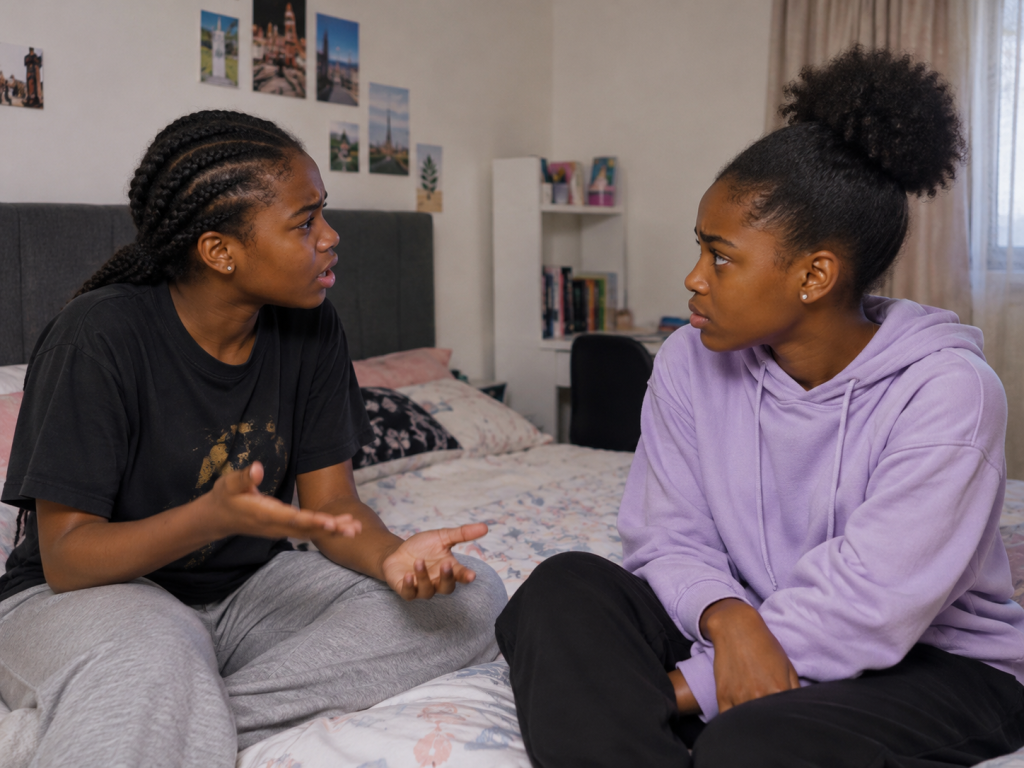
Of course, being hurt does not permit anyone to hurt others. An angry response may still need addressing, even when the anger itself is understandable. But we must be careful not to focus so much on the reaction that we overlook what caused it.
Two things can be true at once. A child can be wrong in how they responded and still have been wronged by what happened.
When Saying Sorry Becomes a Way of Keeping the Peace
I sometimes wonder how many of us grew up believing that apologising was simply what you did to end an argument, particularly when an adult had decided that the conversation had gone on long enough.
- “Say sorry to your sister.”
- “Both of you apologise.”
- “I don’t care who started it. Just make up.”
I understand why parents say these things. There are days when we are tired, overwhelmed and simply do not have the emotional capacity to investigate another disagreement over something that might appear insignificant to us.
But what happens when one child begins to feel that their hurt is being dismissed because everyone is expected to apologise equally? Or when another child learns that they can behave unkindly, knowing that the responsibility for making things right will eventually be shared?

We may achieve silence, but silence is not always the same as resolution. Imagine one sibling says something deliberately unkind. The other becomes upset and starts shouting. As a parent, it would be easy to focus on the shouting because that is what we heard.
Yet the conversation needs to go beyond who was the loudest. We might need to tell one child, “What you said was hurtful.” And the other, “I understand why you were upset, but shouting wasn’t the best way to handle it.”
Both children are being heard, but neither is being excused. For me, that is a far more meaningful lesson than simply insisting they exchange apologies and return to whatever they were doing.
The Danger of Always Expecting One Child to Be the Bigger Person
Another thing I think we need to be mindful of as parents is the tendency to place greater expectations on the child we consider more mature, more understanding or more likely to cooperate.
Sometimes, without realising it, we expect one sibling to overlook things because they are older. We ask the calmer child to make allowances for the more emotional one, or encourage the child who usually apologises first to do so again because we know they will.
And while teaching patience, grace and understanding is important, we must be careful that we are not unintentionally teaching one child that their feelings matter less because they are better at managing them.
Being the older sibling does not mean you should always have to absorb the younger one’s behaviour. Being more emotionally aware does not mean you should always be responsible for repairing the relationship.
I want both my daughters to feel that their voices matter, even when they express themselves differently. Grace should be something we encourage in both children, not something we repeatedly demand from one.
An Apology Should Be More Than a Word
There is a difference between a child saying sorry because they have been told to and a child genuinely understanding why an apology is necessary.
I have come to appreciate that sometimes the most meaningful conversations happen after the emotions have settled. When children are still angry, embarrassed or feeling misunderstood, demanding an immediate apology may produce the words we want to hear without the understanding we hope to develop.
Perhaps we need to give them time to reflect and consider how their actions affected the other person.
Instead of simply asking, “Have you apologised?”, we might ask, “What do you think you could have handled differently?” It opens the door to a conversation rather than a rehearsed response.
And sometimes, after listening carefully, we may discover that one child genuinely has nothing to apologise for in that particular situation. They may have been hurt, disrespected, or unfairly treated without responding inappropriately.
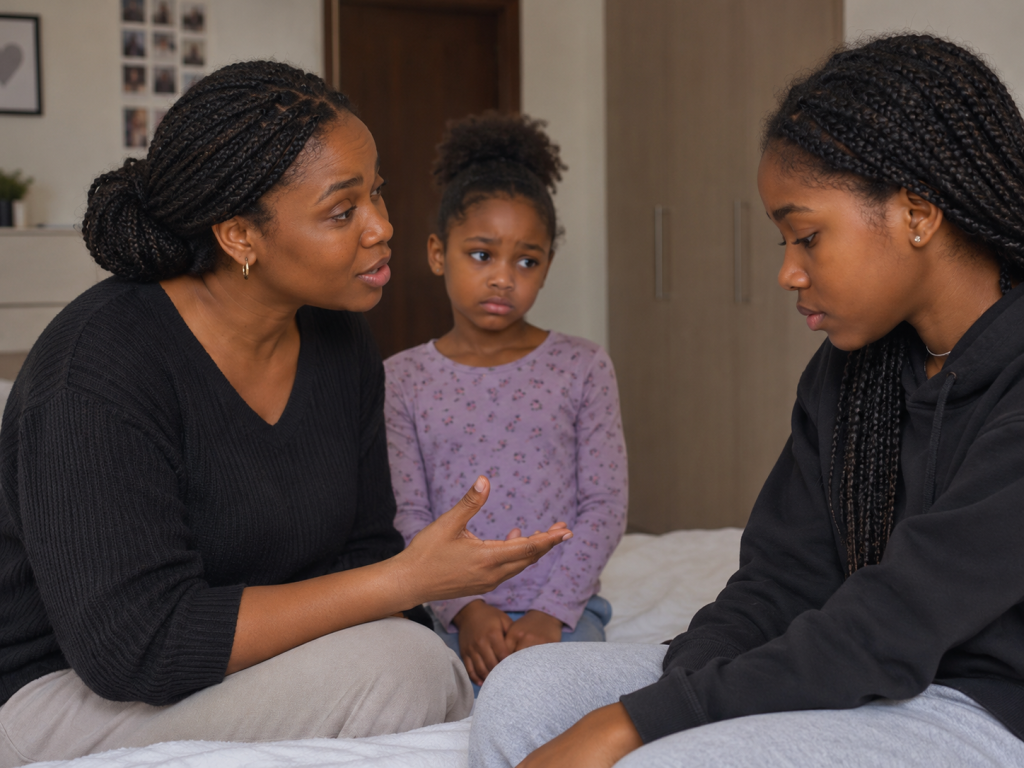
We need to be comfortable with that possibility too. I would rather my children offer a sincere apology after some reflection than say sorry immediately without understanding what they are apologising for.
The Adults We Are Raising
The older my children become, the more conscious I am that parenting is not simply about managing their behaviour today. It is about preparing them for relationships and experiences that I will not always be present to navigate.
One day, they will have disagreements with friends, colleagues, partners and perhaps their own children. They will encounter people who misunderstand them, people who hurt them and situations where they themselves will get things wrong.
I want my daughters to have the humility to admit when they have made a mistake, but also the confidence to speak up when something is unfair.
As a Christian, I value forgiveness, humility and extending grace to others. These are values I want to nurture in my children. But I also believe that forgiveness does not mean pretending something hurtful did not happen, and humility should never be confused with accepting blame that is not ours.
There will be times when they need to apologise, times when they need to forgive and times when they simply need to establish a boundary.
Learning to recognise the difference is part of growing up. And perhaps the disagreements they have with each other now, frustrating as they can be, are opportunities to practise those skills in the safety of home.
A Reflection for Us as Parents
I am not suggesting that every sibling disagreement needs a lengthy discussion or that we will always get it right. There will still be moments when we are exhausted, when patience is running low and when the words “Can everyone just stop arguing?” escape our mouths before we have had time to think.
I certainly know those moments. But perhaps the invitation is to become more intentional about how we respond.
To listen before deciding. To recognise that the loudest child is not necessarily the one who started the problem. To resist asking the more accommodating child to give in simply because it is easier. And to remember that an apology should be meaningful, not merely convenient.
Because ultimately, I do not want to raise children who simply know how to say sorry. I want to raise children who understand when an apology is needed, who can be honest about their mistakes and who are secure enough to know when something is not theirs to carry.
We apologise for the part we played, not for the actions of others.
And if we can teach our children that distinction while they are still navigating disagreements over bedrooms, borrowed belongings and who said what, perhaps we will be giving them something far more valuable than a peaceful afternoon.
We will be helping them build the confidence, compassion and wisdom they will need in relationships long after they have left our homes.
Until next time,
With love,
Pam.