
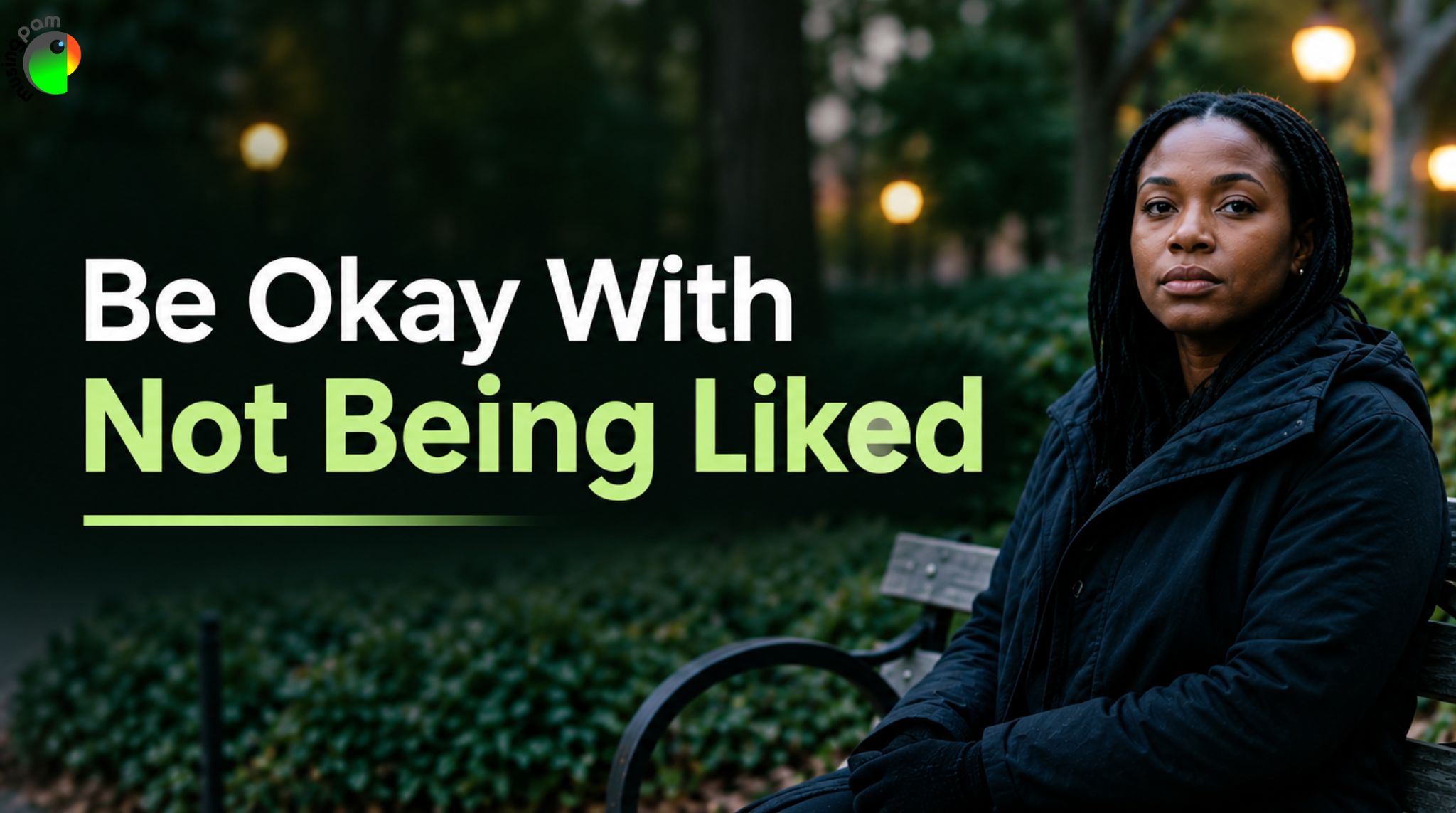
Be Okay With Not Being Liked
There is something deeply uncomfortable about knowing that someone does not like you. Even when we tell ourselves that other people’s opinions do not matter, there is often a small part of us that wants to understand why.
Did I say something wrong? Was I misunderstood? Have I offended them without realising it? And sometimes, before we know it, we find ourselves replaying conversations, questioning our actions and wondering what we could have done differently to change someone’s perception of us.
I have come to realise that one of the quiet freedoms we must learn to embrace in life is being comfortable with the possibility that not everyone will like us. Not because we are unkind, difficult, or unwilling to reflect on ourselves, but simply because being liked by everyone is neither realistic nor necessary.
And perhaps the harder truth is that we can be good people, with good intentions, and still be someone’s least favourite person.
The Exhausting Business of Being Liked
I wonder how much of our lives we spend trying to manage other people’s perceptions of us. We soften our opinions because we don’t want to seem confrontational. We agree to things we would rather decline because we fear disappointing someone.
We overexplain decisions that don’t need explaining, and sometimes we apologise to restore peace, even when we have done nothing wrong. Before long, we become so concerned with how others experience us that we forget to consider how we are experiencing ourselves.
The truth is that wanting to be liked is human. We are relational beings, and most of us want to feel accepted, valued, and included. There is nothing wrong with that desire. The difficulty begins when our need for acceptance becomes so powerful that we start negotiating away parts of ourselves to secure it.

I have often wondered how many times people have said yes when everything within them was saying no. How many have remained silent in conversations where their voices mattered? How many have tolerated disrespect because they were afraid that setting a boundary would change how someone felt about them?
And perhaps the most uncomfortable question of all is this: how often have we mistaken being liked for being valued? Because the two are not always the same.
Sometimes, People Will Dislike the Version of You That Has Grown
One thing I am learning is that growth can change the way people experience us. The person who once agreed to everything may begin to say no. The person who constantly made themselves available may start protecting their time.
The person who avoided difficult conversations may finally find the courage to speak honestly. And suddenly, the very changes that represent growth for us may become a source of discomfort for others.
Sometimes, people do not necessarily dislike who we are. They dislike the fact that we are no longer who they were accustomed to us being.
I think this is particularly difficult when you have spent years being the dependable one, the understanding one, the person who makes allowances and finds ways to accommodate everyone else. When you begin to recognise that your needs matter too, it can feel almost selfish to make different choices.
But growth will sometimes require us to disappoint people who benefited from our inability to disappoint them.
That does not mean we should become insensitive or dismissive of other people’s feelings. It simply means recognising that someone else’s disappointment is not always evidence that we have done something wrong.
We can be considerate without constantly seeking approval. We can be kind without being endlessly available. And we can love people without giving them unlimited access to our lives.
Not Every Misunderstanding Needs to Be Corrected
This one is particularly challenging. There is something frustrating about knowing that someone has formed an opinion of you based on an incomplete story, a misunderstanding, or perhaps something someone else has said.
Our instinct is often to explain ourselves. We want them to know our intentions, understand our perspective, and recognise that there is more to the situation than they have been told.
And sometimes, having that conversation is necessary, particularly when relationships matter, and misunderstandings can be resolved. But there are also moments when we must accept that people will believe what they choose to believe, regardless of how carefully we explain ourselves.
We cannot spend our lives chasing every misunderstanding or correcting every narrative about who we are. It is exhausting, and it gives other people’s opinions far too much authority over our peace.
I am learning that there is a difference between being accountable for my actions and feeling responsible for everyone’s interpretation of them.

If I have hurt someone, I want to be able to acknowledge that, listen, and make amends. But if I have acted with integrity, reflected honestly, and done what I reasonably can, I must also learn when to leave things alone.
Not everyone will understand your heart, and not everyone will be interested in doing so. That can be painful to accept, especially when being misunderstood feels unfair. But sometimes, peace comes from knowing that you have done your part, even when the other person never changes their mind.
Being a Good Person Does Not Guarantee Being Liked
I think we sometimes carry an unspoken belief that if we are kind enough, thoughtful enough, and fair enough, people will naturally like us. But life does not work that way.
We all have different personalities, experiences, expectations, and values. The qualities one person appreciates in us may be the very qualities another person finds difficult. Someone may admire our confidence while another interprets it as arrogance. One person may value our honesty while another experiences it as being too direct.
And we must be careful not to assume that everyone who dislikes us is jealous, threatened, or uncomfortable with our growth. Sometimes, we simply do not connect. Sometimes, our personalities clash. Sometimes, we have genuinely got things wrong.
There is maturity in being able to acknowledge these possibilities without allowing them to destroy our sense of self. I do not need to make someone the villain simply because they do not like me. Equally, I do not need to make myself the problem.

We can be two decent people who are simply not each other’s people. And that is okay.
What Are We Teaching Our Children About Acceptance?
As a parent, this reflection feels particularly important because I think about the messages we unintentionally pass on to our children. We want them to make friends, feel included, and develop meaningful relationships. We worry when they are left out, when friendships change, or when someone at school does not seem to like them.
And naturally, our instinct is to protect them from the pain of rejection. But I wonder whether one of the greatest gifts we can give our children is helping them understand that their worth is not determined by how many people like them.
I want my daughters to be kind, respectful, and considerate. I want them to reflect when they get things wrong and understand that relationships require effort, compromise, and sometimes an apology.
But I also want them to know that they do not have to change who they are simply to gain someone’s approval. I do not want them to spend their lives shrinking their personalities, hiding their opinions, or compromising their values because they are frightened of being disliked.
There will be friendships that do not work out, people who misunderstand them, and spaces where they do not feel accepted. I hope that they learn to distinguish between situations that require personal reflection and those that simply require them to recognise that not every relationship is meant to become a close one.
And perhaps the most powerful way to teach them this is not through what I say, but through what they see me practise. If they constantly see me worrying about what others think, struggling to say no or seeking reassurance that everyone is happy with me, what am I teaching them about their own worth?
Our children are watching how we navigate acceptance, rejection, and boundaries long before they have the words to describe these experiences themselves.
Finding Peace in Who You Are
My faith also reminds me that my identity cannot be built entirely around the approval of people.
Galatians 1:10 challenges us to consider whether we are seeking the approval of people or of God. For me, that is an important reminder that living with integrity will not always make us popular, and doing what is right will not always be met with understanding.
There is a difference between wanting to live in peace with people and needing everyone to approve of us.
I still believe we should be open to correction. We should never become so convinced of our own goodness that we dismiss uncomfortable feedback. Sometimes, the very people who challenge us are helping us see something about ourselves that we need to address.
But there is also wisdom in recognising that not every opinion deserves the same weight in our lives.
The people who genuinely know us, love us, and are willing to tell us difficult truths deserve our attention. Their perspectives can help us grow. But allowing every passing opinion to determine how we feel about ourselves is a heavy and unnecessary burden.

There is freedom in knowing who you are, recognising where you still need to grow, and being at peace with the fact that some people may never fully appreciate you.
And Finally, Be Okay With Not Being Liked
Perhaps this is something we become better at with age, experience and a few difficult lessons along the way.
I am not suggesting that we should stop caring about people or become indifferent to how our actions affect them. Quite the opposite. I believe we should continue to be thoughtful, compassionate and willing to learn.
But I am increasingly convinced that we cannot live meaningful, authentic lives while making universal approval our goal.
There will always be someone who wishes we were different. Someone who thinks we should have handled something another way. Someone who does not understand our choices or simply does not connect with who we are.
We can spend our lives trying to win them over, or we can invest that energy in becoming people we are genuinely at peace with.
So, be kind. Be accountable. Apologise when you are wrong. Listen when someone offers you honest feedback. Continue to grow, and never use the language of boundaries or self-respect as an excuse to treat people poorly.
But please, do not spend your life trying to convince everyone to like you.
You are allowed to be a good person and still not be everyone’s cup of tea.
And perhaps the real freedom is reaching a place where you no longer feel the need to keep proving that you are.
Until next time,
With love,
Pam.