
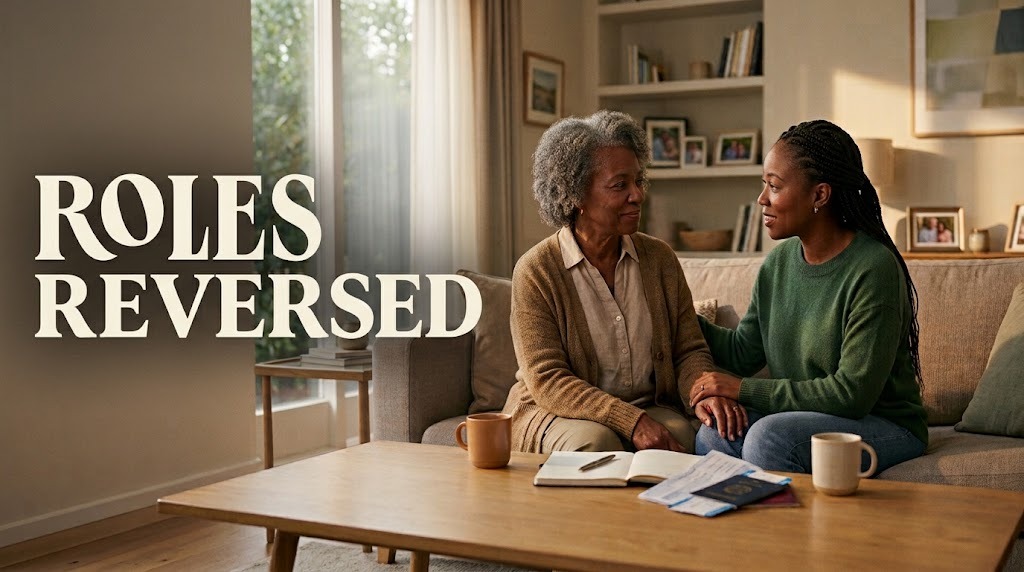
Roles Reversed
My mum had been staying with me when she needed to travel for a family friend’s wedding. What should have been a fairly straightforward conversation about how she was going to get there somehow turned into one of those ordinary moments that make you stop and reflect on life.
We talked through the different options: coach, train or flying. Eventually, we decided that flying made the most sense, but then we had to work out how she was going to get to the airport.
I wasn’t able to drive her there, so we looked at the alternatives. My mum was most comfortable taking the coach, but unfortunately the timings simply didn’t work, which really only left the train.
The problem was that my mum absolutely did not want to take the train.
She wasn’t comfortable with the idea at all. I tried explaining the journey, reassuring her that it would be straightforward and telling her that she would be fine, but she had already decided that this was not something she wanted to do.
I kept trying to find another solution, partly because I understood that it was outside her comfort zone, but eventually we reached the point where there really wasn’t another practical option.
She was going to have to do the thing she didn’t want to do.

As I sat there trying to reassure her, telling her where she needed to go and explaining that she was more than capable of managing the journey, I suddenly became very aware of the position I was in.
I was trying to make my own mother do a hard thing, something unfamiliar that she would much rather avoid, and it felt incredibly strange.
Somewhere in the middle of telling her, “Mum, you’ll be fine. You can do this,” I realised that I had heard versions of those words many times before.
“Only the roles had been reversed.”
The Woman Who Made Me Do Hard Things
My mum has spent much of my life encouraging me to do things that were outside my comfort zone. There have been times when I didn’t feel ready, when I was scared or when I simply didn’t want to do something, and she didn’t always respond by making the difficulty disappear. Sometimes she pushed me to do it anyway.
When you are a child, or even a young adult, you don’t necessarily appreciate that kind of parenting. When something feels frightening or uncomfortable, you can become convinced that the loving response would be for your parent to allow you to avoid it.
You wonder why they are insisting when you have already explained, very clearly, that you don’t want to do it.
Looking back, though, I can see those moments differently. There were probably times when my mum could see that what was holding me back wasn’t an inability to do something but simply my fear of doing it.
She knew that being uncomfortable didn’t necessarily mean I was incapable, and sometimes the only way for me to discover that was to actually do the thing I was afraid of.
There is something quite powerful about having someone in your life who can see your capacity when you cannot see it yourself. Sometimes we need somebody who loves us enough to say, “I understand that you are scared, but I also know that you can do this.”
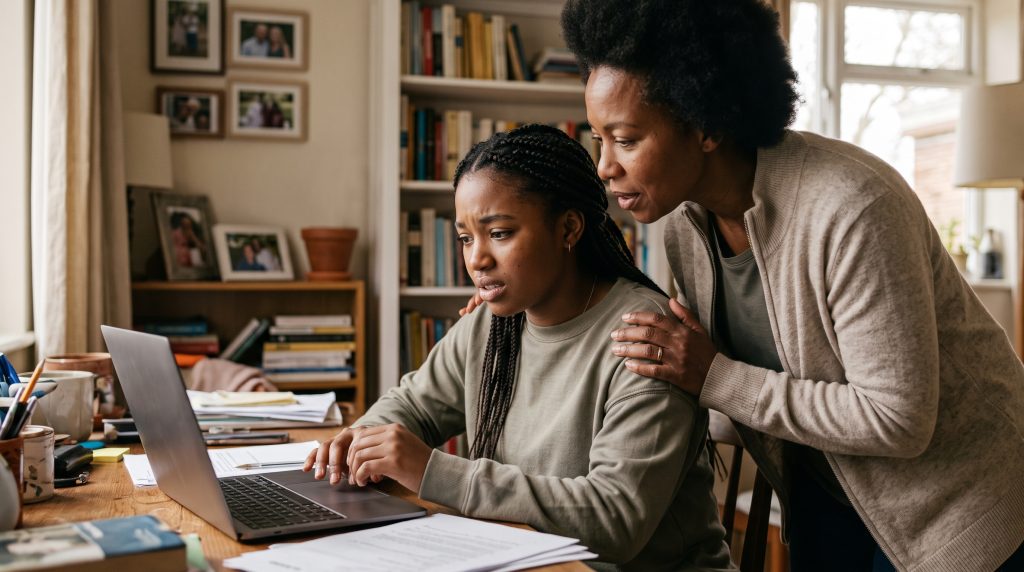
Standing on the other side of that conversation with my mum made me appreciate it differently.
I knew she didn’t want to take the train. I knew she would have preferred me to find another solution, and part of me wanted to do exactly that. Yet I also knew she was perfectly capable of managing it.
I wasn’t pushing her because I didn’t understand her discomfort; I was pushing her because I understood it and knew she could get through it.
And suddenly I wondered how many times she had looked at me in the same way.
When Did This Happen?
Nobody really tells you about these subtle changes in the relationship between parents and their adult children.
We talk about growing up, leaving home, becoming independent, building careers and perhaps raising children of our own, but we don’t talk quite as much about the moment when you begin to notice that the direction of care is changing too.
It doesn’t necessarily happen dramatically. There isn’t a particular birthday when somebody announces that things are going to be different from now on. Instead, it appears in very ordinary moments.
You start checking that your parents have arrived somewhere safely. You help them navigate something unfamiliar, remind them about something or explain something they aren’t confident about. You hear yourself saying, “Call me when you get there,” and suddenly realise that those are the exact words they spent years saying to you.
It can be funny, but there is also something quite emotional about it. For so much of our lives, our parents are the people we associate with knowing what to do. They are the ones giving directions, making decisions, reassuring us and sometimes pushing us into situations we would rather avoid.
Then adulthood arrives and, little by little, you discover that the relationship has become more layered.
- They are still your parent, but sometimes you are the reassuring one.
- They still worry about you, but now you worry about them too.
- They still advise you, but occasionally they need your advice.
- They still say, “Let me know when you get there safely,” but now you find yourself saying the same thing back.
Perhaps the roles don’t completely reverse after all. Maybe the relationship simply expands.
Learning to Care Without Taking Over
There is an important distinction here because I don’t believe our parents suddenly become children simply because they are getting older. My mum is still very much my mum. She has her own mind, her own preferences, her own wisdom and her own way of doing things, and one uncomfortable train journey certainly doesn’t change that.
There can sometimes be a temptation to describe caring for ageing parents as though the parent-child relationship simply flips, but I think the reality is much more nuanced.
Supporting someone does not mean taking away their independence, and helping someone navigate something difficult does not mean they are no longer capable. What changes is that care begins to move more visibly in both directions.
For years, our parents pour so much into us without us necessarily recognising it. They remember things for us, worry about us, encourage us, guide us and push us.
As we become adults, we begin to have opportunities to offer some of that same care back, not because we are replacing them as the parent, but because love has matured into something more reciprocal.
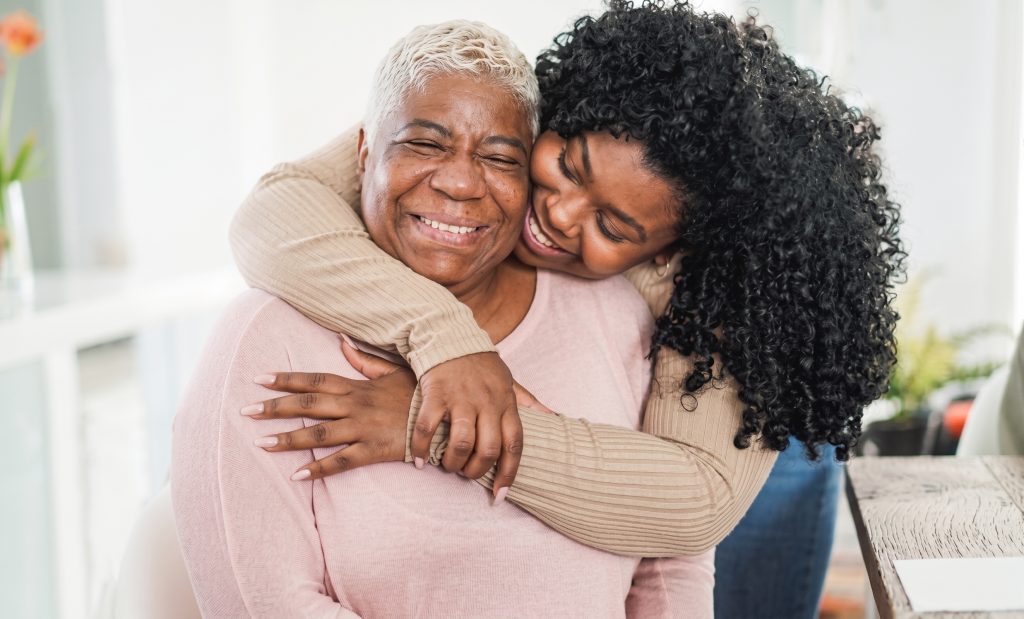
There is something beautiful about being able to say to the person who has spent years being your safe place, “You can lean on me too.”
Seeing My Mother Differently
The whole experience also reminded me that one of the gifts of adulthood is beginning to see our parents as people, rather than simply as Mum or Dad.
As children, we often assume our parents know exactly what they are doing. We imagine that when they pushed us into something difficult, they were completely confident about the outcome. We rarely consider that they might have been worried too, or that they were sometimes making decisions while wondering whether they were getting it right.
As I get older, I understand more clearly that our parents were human beings raising human beings. They had fears, insecurities and things that sat outside their own comfort zones, just as we do. Yet they still had to find ways of making us believe that we could face the world.
That changes the way I look back at some of the things my mum did for me. Perhaps when she said, “You’ll be fine,” she didn’t always know with absolute certainty that everything would be fine. Maybe what she really meant was, “Whatever happens, I believe you can handle it.”
That is a very different kind of reassurance.
It isn’t a promise that nothing difficult will happen; it is confidence in the person facing the difficulty.
And on this occasion, that was what I was trying to give back to her.
Full Circle
Eventually, my mum took the train. She did the thing she really didn’t want to do, managed the journey and, unsurprisingly, she was absolutely fine.
I couldn’t help smiling at the irony of it afterwards. The woman who had spent years making me do hard things had just been made to do a hard thing by me. For one small moment, I had found myself on the other side of a conversation we had probably had many times throughout my life.
It made me think about how often we only understand certain aspects of our parents when life eventually places us in a similar position. We begin to understand the worry behind some of their questions, the love behind some of their instructions and the reason they didn’t always rescue us from everything that made us uncomfortable.
Sometimes loving someone means making life easier for them, but sometimes it means standing beside them while they do something difficult. It means resisting the urge to rescue them because you know they are capable of more than they currently believe.
There was nothing particularly extraordinary about what happened with my mum. It was just a journey to an airport, but perhaps that is why it stayed with me. Some of the biggest realisations about our relationships happen in the most ordinary circumstances.
One day your mum is the person pushing you out of your comfort zone and telling you that you can do hard things. Years later, you find yourself looking at that same woman and saying, “Mum, I know you don’t want to do this, but trust me. You can do it.”
And suddenly you understand her a little more.
Perhaps that is part of the privilege of growing older with our parents. We get the opportunity to return some of what they have poured into us, not by becoming their parents or taking away their independence, but by being a source of reassurance when they need it.
My mum taught me that I could do hard things long before I fully understood the lesson.
It was quite something to realise that, all these years later, I got to remind her of the same thing.
Funny how life comes full circle, sometimes in the biggest moments of our lives and sometimes simply while trying to get your mum to the airport.