
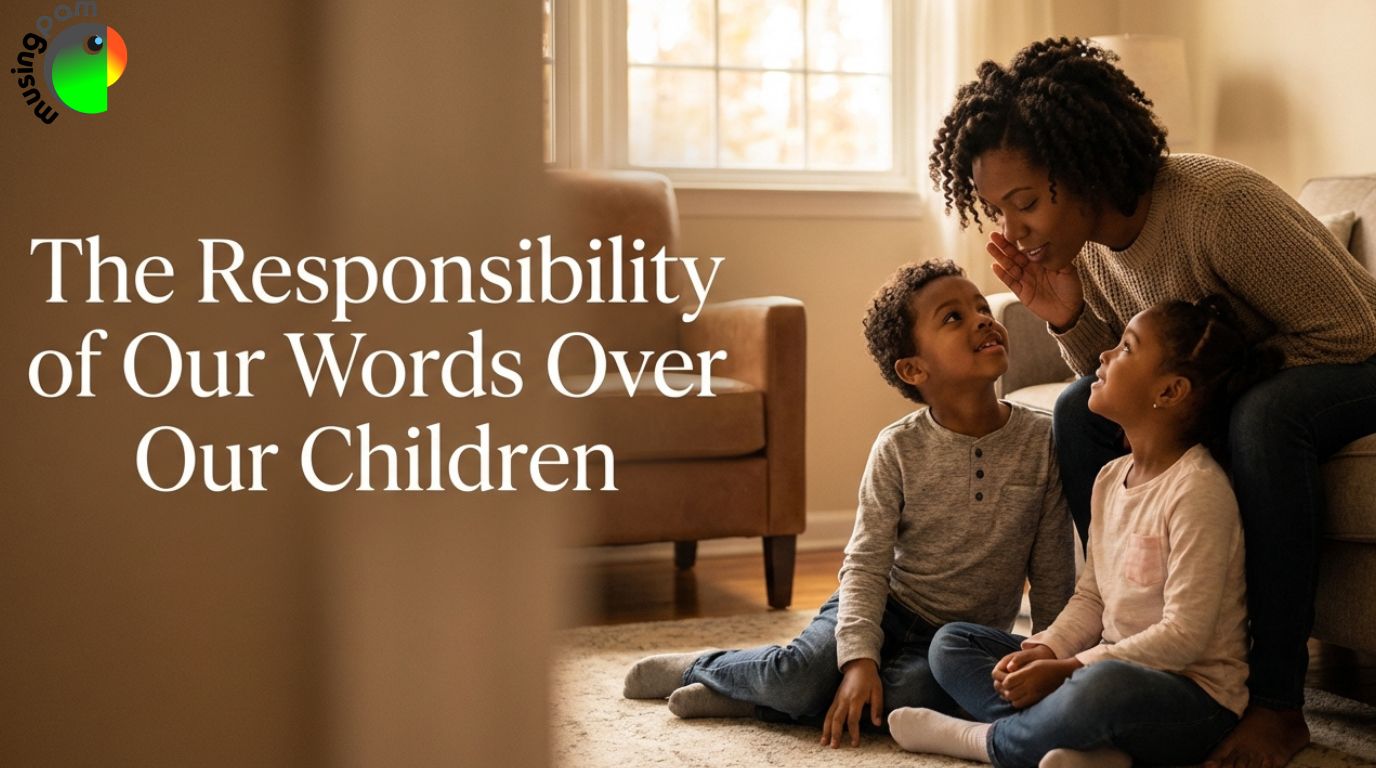
The Responsibility of Our Words Over Our Children
There are moments in parenting when you realise just how powerful your words are. Not the big speeches or the lectures we carefully prepare in our minds, but the everyday words. The ones spoken in passing. The ones said when we are tired, frustrated, or simply trying to get through the day.
Our children carry our words longer than we realise.
As parents, we often think our primary responsibility is to provide food, shelter, education and guidance. But one of the most powerful responsibilities we carry is the words we speak over our children. Words shape identity. Words shape confidence.
Words shape the internal voice our children will carry with them long after they leave our homes.
The way we speak to our children today often becomes the way they speak to themselves tomorrow.
Words Become the Voice They Hear Inside

Children learn who they are partly through what they hear repeatedly.
If a child constantly hears
“You are difficult.”
“You never listen.”
“You are always causing problems.”
Those words slowly begin to form their sense of identity.
But the opposite is also true.
When a child hears
“I am proud of you.”
“You handled that well.”
“You are thoughtful.”
“You are strong.”
Those words begin to build something inside them. A quiet confidence. A sense that they are capable. A belief that they can overcome challenges.
The Bible reminds us of the power carried in our words.
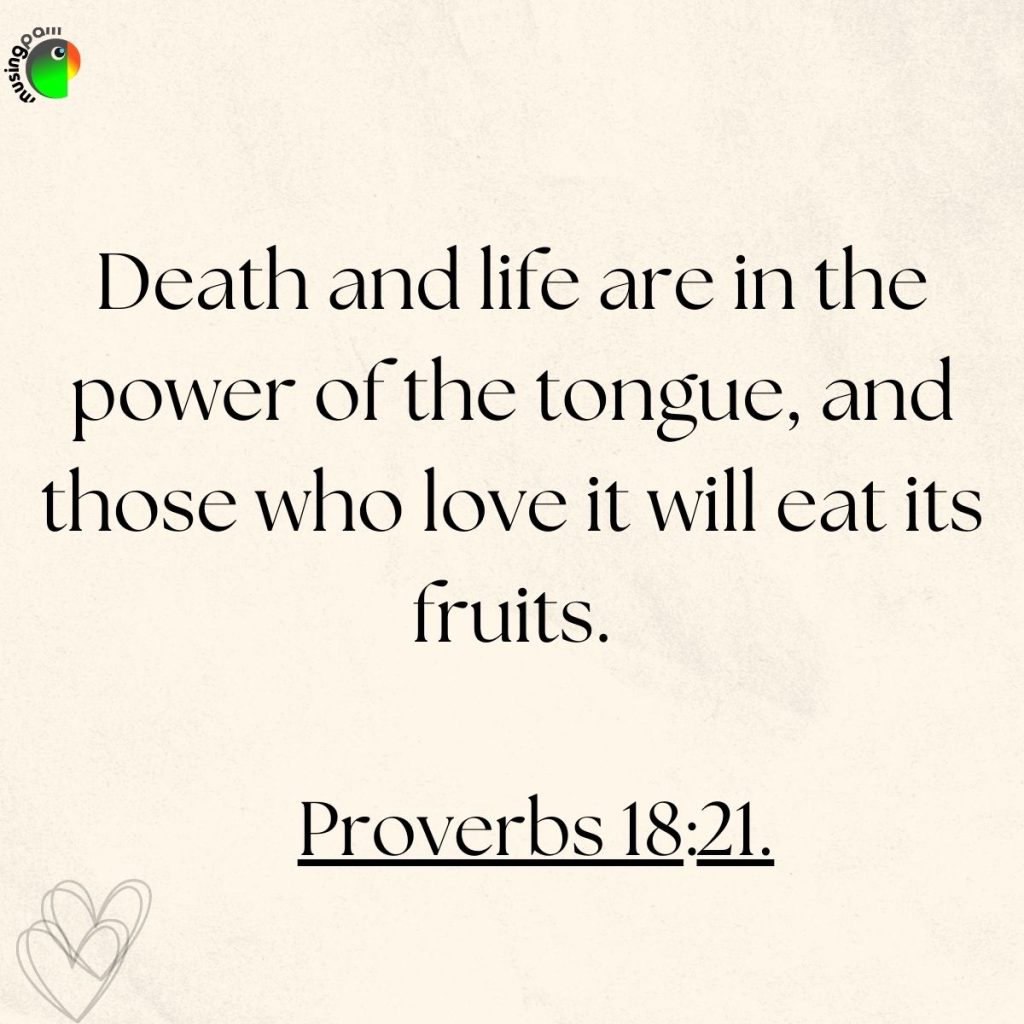
This verse is a sobering reminder that our words are never empty. They create something. They either nurture growth or slowly diminish confidence.
As parents, we are constantly planting seeds with the words we speak.
Speaking Identity, Not Just Behaviour
Every child will make mistakes. They will forget things, test boundaries, struggle in school, say things they shouldn’t, and sometimes disappoint us.
That is part of growing.
But the way we respond to those moments matters deeply. There is a difference between correcting behaviour and attacking identity.
Instead of saying
“You are lazy”
We can say
“I know you can do better than this.”
Instead of saying
“You always mess things up”
We can say
“This didn’t go well, but we can work through it.”
One labels the child. The other corrects the behaviour while protecting their sense of worth.
Children should never leave moments of correction believing they are the problem. They should leave knowing that the behaviour needs to change, but that they are still loved, still valued and still capable.
The Words We Speak Shape Their Identity
As children grow, especially into the teenage years, they begin to discover new parts of themselves. They are forming opinions, building confidence, navigating friendships and trying to understand who they are in the world.
In this season, our words matter even more.
The world can be quick to criticise. Social media can be loud with comparison. School environments can sometimes make children question their worth.
Home should be the place where their identity is reinforced, not weakened.
The Bible speaks beautifully about the power of life-giving words:
Proverbs 16:24
“Gracious words are a honeycomb, sweet to the soul and healing to the bones.”
Gracious words do more than encourage. They heal. They restore. They strengthen the soul.
When we speak kindly, patiently and intentionally to our children, we are not just managing behaviour. We are nurturing their emotional and spiritual well-being.
Speak Life
None of us will get this right all the time. Parenting is full of moments where we react too quickly, speak out of frustration, or say things we wish we could take back.
But the goal is not perfection. The goal is awareness and intentionality.
To pause before speaking.
To choose words that build rather than break.
To remind our children who they are, even when correcting them.
Speaking life means recognising that every day we are sowing seeds into our children’s hearts. Seeds of confidence. Seeds of identity. Seeds of resilience.
Even in moments of discipline, we can still say:
“I know you can do better.”
“You are stronger than this mistake.”
“I believe in who you are becoming.”
And when we get it wrong, we show them something equally powerful.
We apologise.
We take responsibility.
We show them that humility and love can coexist.
A Final Reflection
Our children will hear many voices as they grow. Friends, teachers, social media, the world around them.
But one voice should remain stronger than all the others.
The voice that tells them they are loved.
The voice that reminds them they are capable.
The voice that encourages them when life becomes difficult.
Long after they leave our homes, they will still hear echoes of what was spoken over them.
May those echoes be words of life.
Words of strength.
Words of belief.
Because the responsibility of our words is not small.
They help shape the people our children become.